🚶 On the ground
A Quiet Day in Hagi
Walking where modern Japan quietly began
萩で幕末を歩く ― 松下村塾と高杉晋作に会いに行った山口の旅
This piece is written in both English and Japanese. You are reading the English; the full Japanese version is further down.この記事は英語と日本語の両方で書いてあるよ。いま読んでるのが英語版で、同じ内容の日本語版がページの下にまるごとあります。↓ 日本語で読む
If you’ve ever read about how Japan transformed itself in the late 19th century — the Bakumatsu, the end of the Edo period, and the Meiji Restoration — there’s a small town in Yamaguchi Prefecture where a surprising amount of that quietly began. That town is Hagi.
The Bakumatsu tends to get told loudly, in dramas and comics. Come to the place it actually started and it’s the opposite: small, quiet, and completely undramatic. I’m not a historian. But standing there and thinking this is where Yoshida Shoin was talking, this is where Takasugi Shinsaku started running — that was worth the trip on its own.
Getting there on a red train
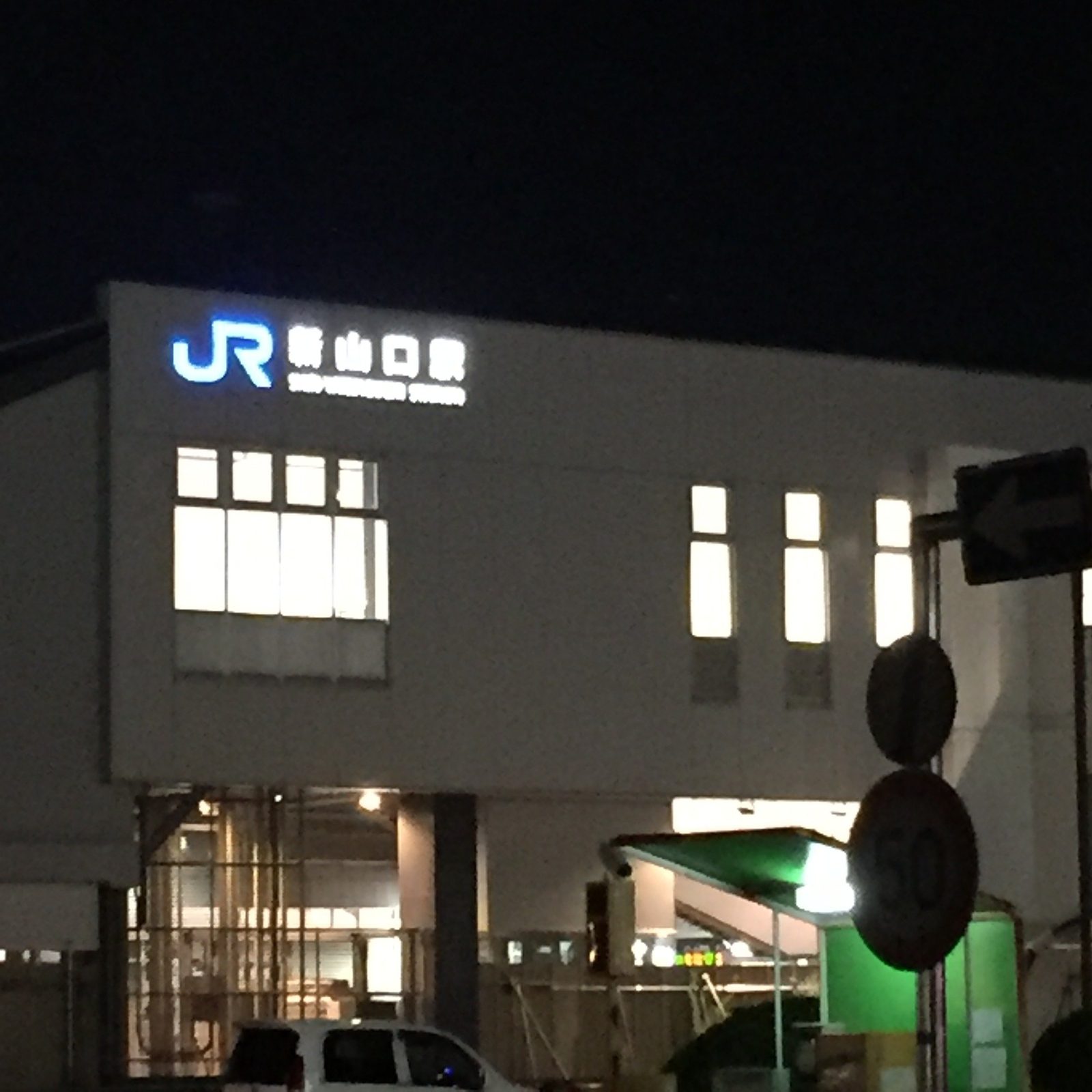
It starts at Shin-Yamaguchi, where the shinkansen drops you.
From there you change to the local line, and what turns up is a one- or two-carriage red train with a retro “Rapid” sign on the front. Honestly, that transfer is my favourite part.
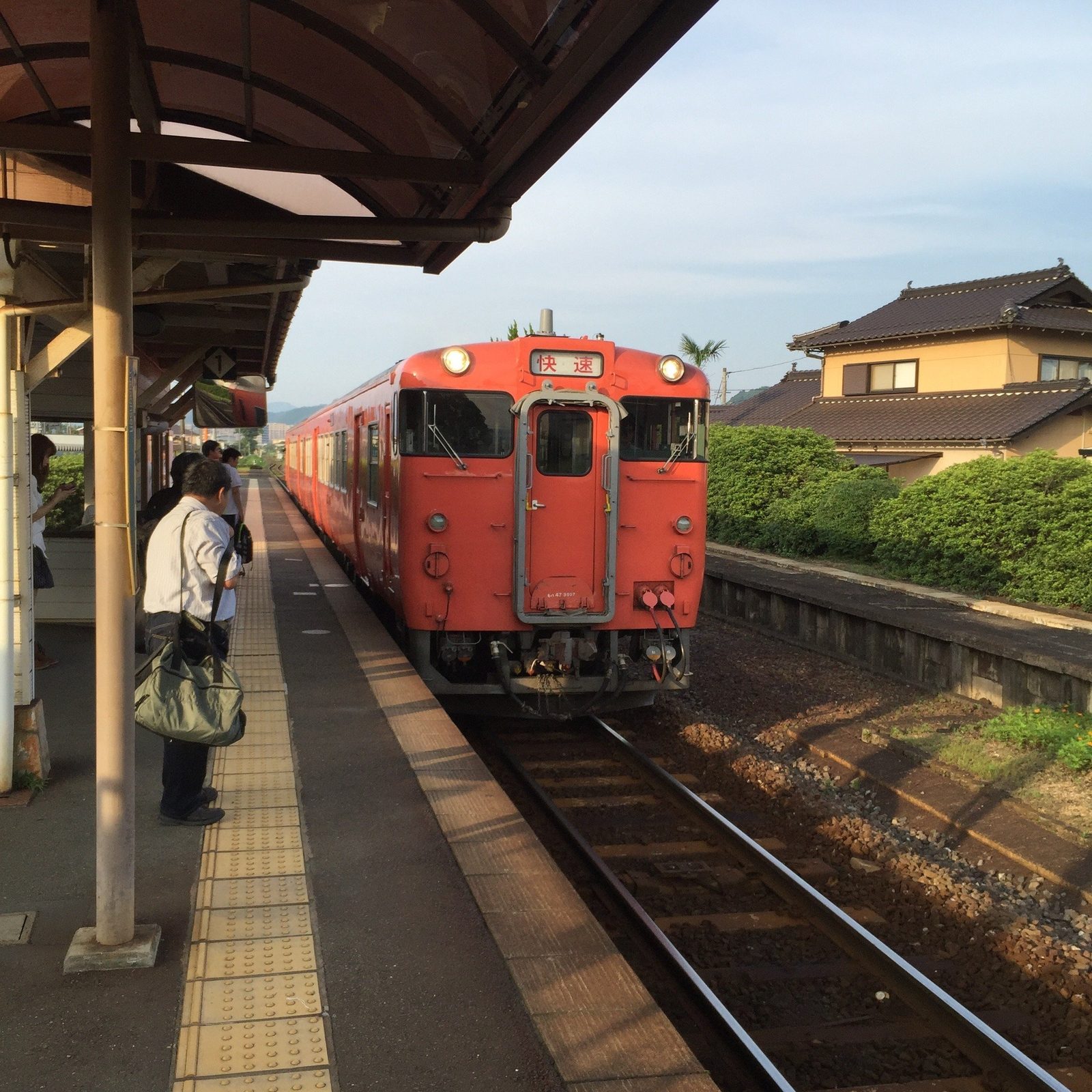
Bullet train, then a slow local — for me that swap is the switch that flips a journey into a trip. Hagi is a fair way out, so you get a while to look out of the window and let your head shift into the 1860s.
Shoka Sonjuku — the smallest school in Japan
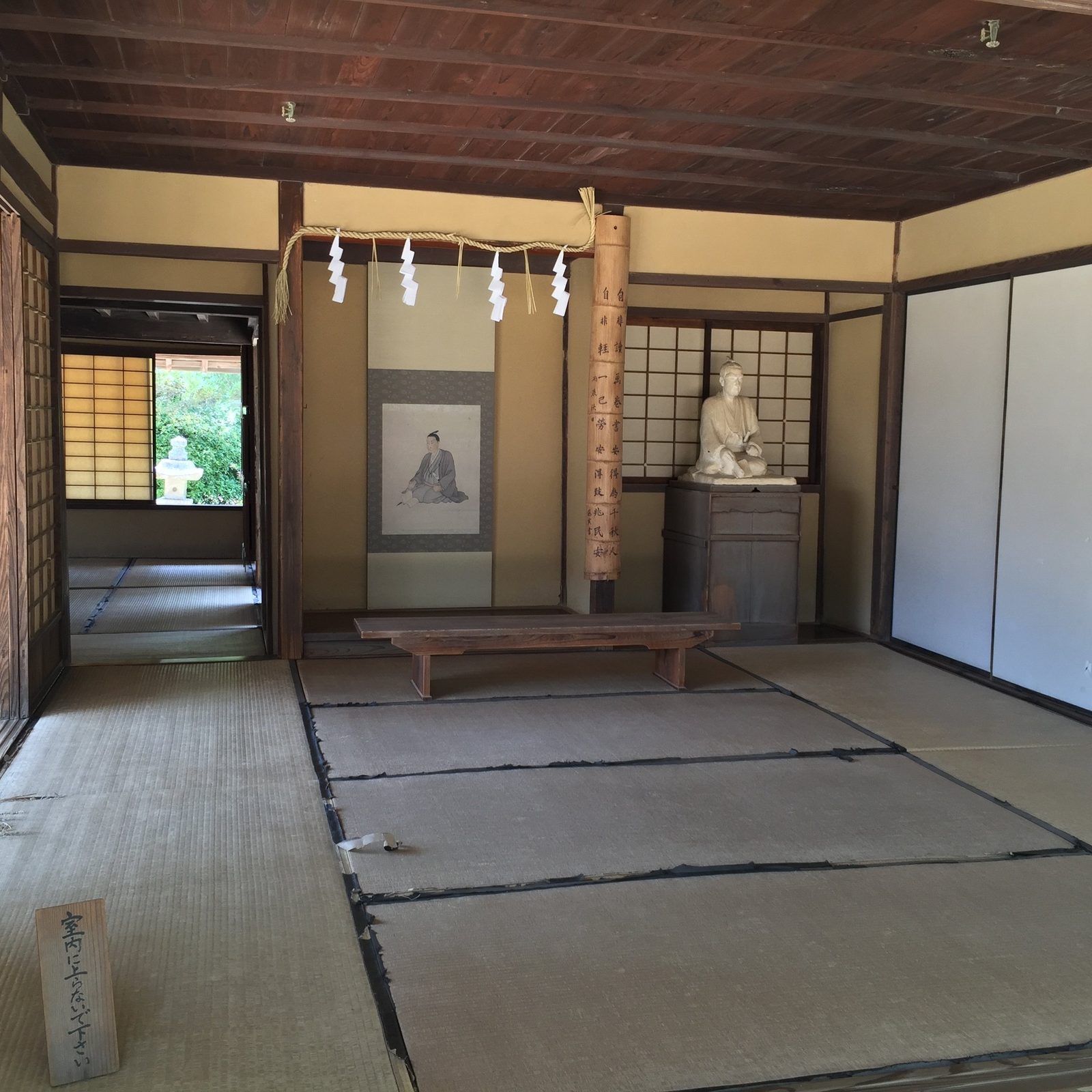
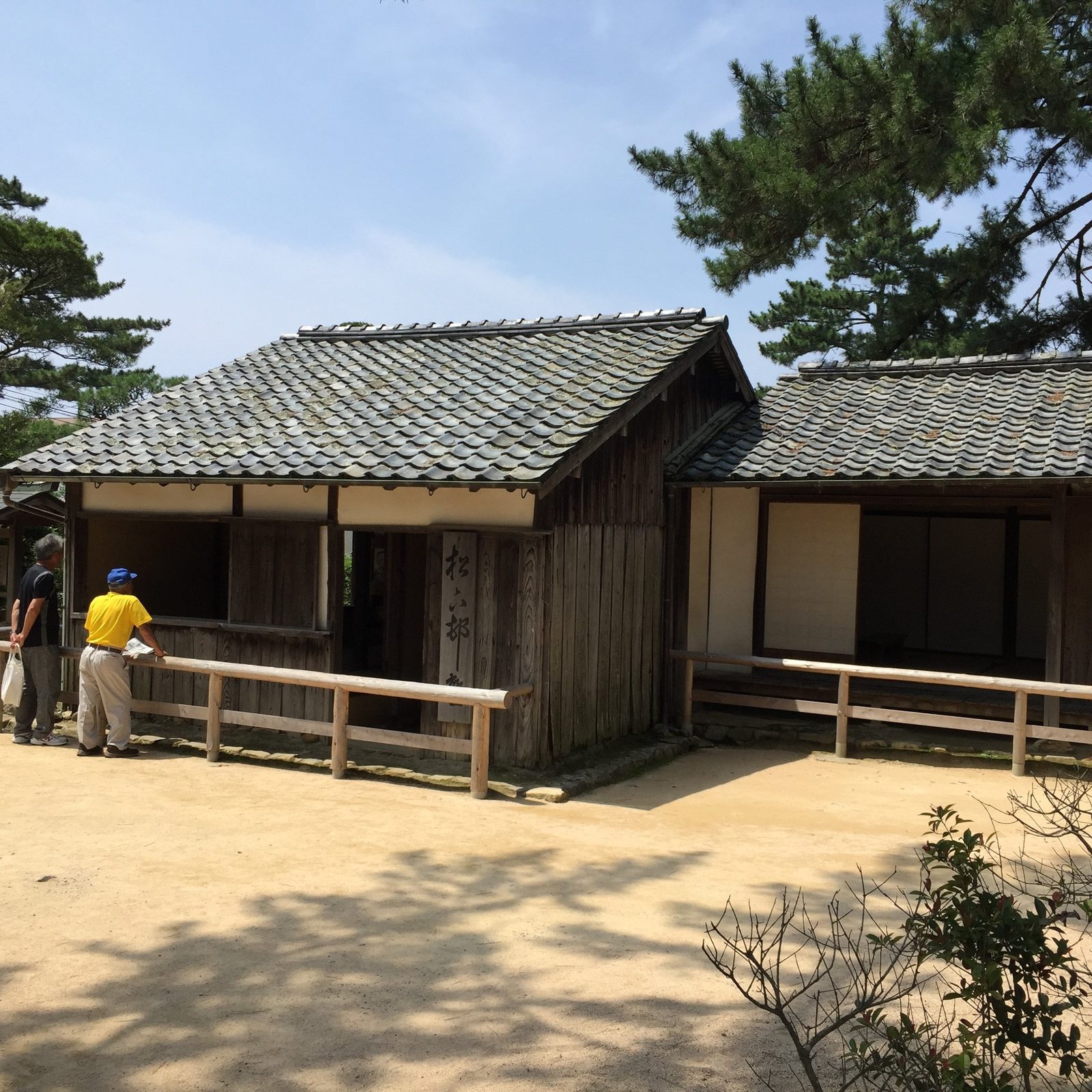
Inside the grounds of Shoin Shrine, in the middle of town, sits Shoka Sonjuku.
The first reaction most people have — mine included — is wait, that’s it? The school that prepared Japan’s modernisation looks like an ordinary old farmhouse.
Look through the opening and there’s a tatami room with a statue and a portrait of Yoshida Shoin, quietly placed. Out of this one room came Takasugi Shinsaku, Kusaka Genzui, Ito Hirobumi, Yamagata Aritomo — the people who would go on to build the country. Standing there, the air feels denser than it should.
You can’t go inside; you look in from the veranda, and that’s plenty. What I liked most is that there’s no attempt to stage it as A Significant Place. They’ve left it at life size.
Takasugi Shinsaku, at the moment he decided
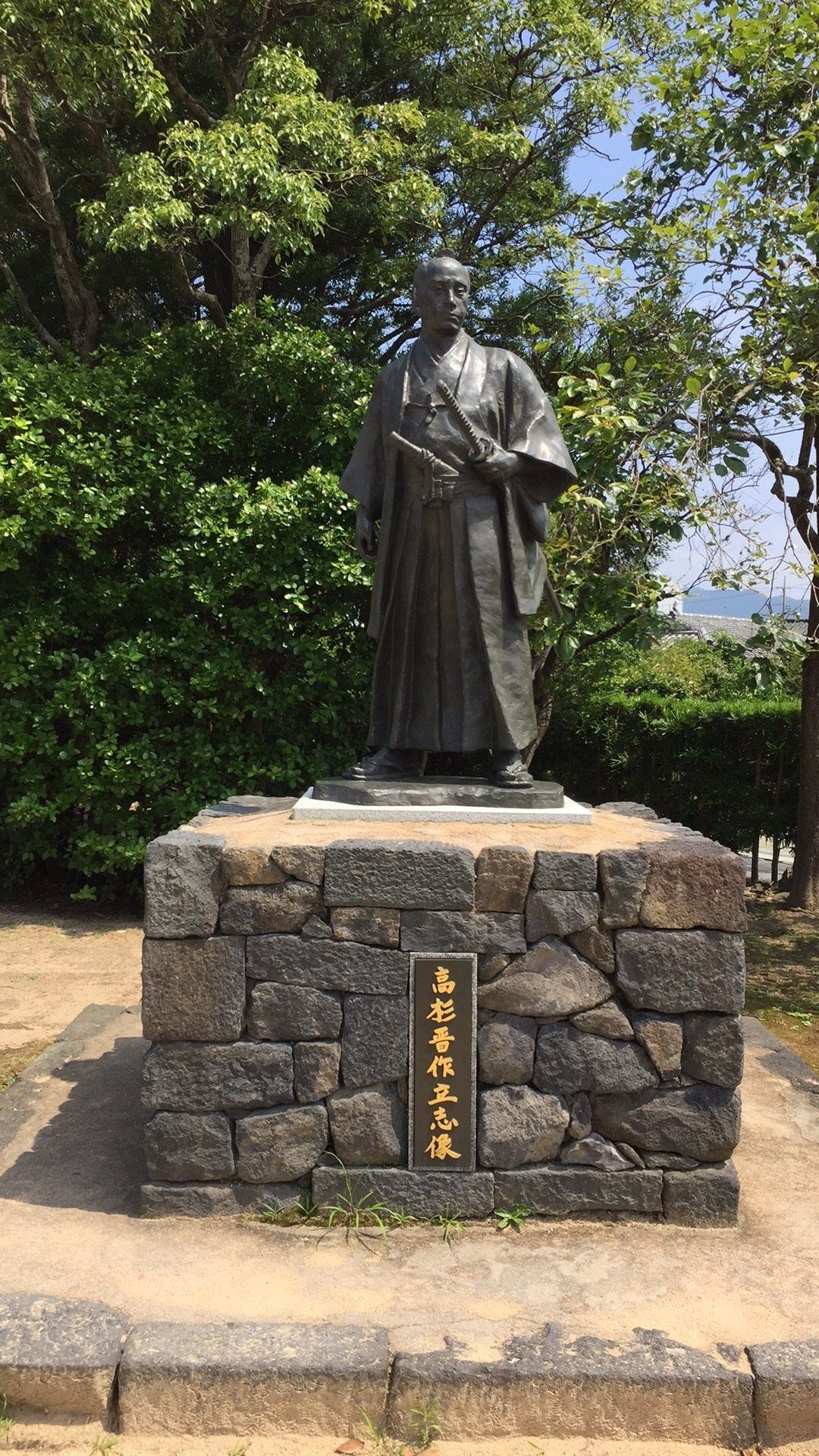
A short walk from the shrine is the bronze statue of Takasugi Shinsaku.
He’s remembered as the man who founded the Kiheitai and tore through the end of the Edo period. But standing in front of the statue, what comes across is smaller and better than that: this was a young man, and he started from here.
Beside it is the word 立志 — resolution. It’s him before he was anyone. You don’t need to be into history for that to land. Standing on the spot where somebody decided to go and do it gets you a little, whoever you are.
Five things worth knowing
- Entry to Shoka Sonjuku and Shoin Shrine is free — it’s shrine grounds.
- You can’t go inside the building. You view it from the veranda, which also means rain doesn’t spoil the visit.
- Hagi is spread out and a way from the station. A rental bike or the local bus makes it much easier.
- There are cobbles and gravel paths. Wear shoes you can walk in.
- Summer is properly hot. Bring water and a hat. I underestimated this and regretted it.
Access
From Tokyo, Shin-Osaka or Hakata, take the shinkansen to Shin-Yamaguchi, then the JR Sanyo/Sanin lines or a bus onward. The nearest station is Higashi-Hagi.
The whole town works a bit like an open-air history park, so a full day on a bicycle is about right.
Afterwards
It isn’t a showy sightseeing town. What it gives you is a small jolt — oh, the scenery from the textbook is a real place. If you’re into the Bakumatsu, obviously. But even if you aren’t, it works as a quiet walk through history.
Take the red local train out of Shin-Yamaguchi, spend half a day to a day wandering. That was exactly the right shape for it.
Next time I want to get to Chofu, down near Shimonoseki, and Tsuwano. There’s more of Yamaguchi’s Bakumatsu I haven’t walked yet.
🇯🇵 日本語版
教科書で読んだあの場所に、ふらっと立ち寄ってみたよ。
ずっと前から「いつか行きたい」って思ってた場所が、山口の萩(はぎ)だった。
幕末って、なんかドラマや漫画では派手に描かれがちなんだけど、実際に現地に来てみると、その「始まりの場所」は驚くほど静かで、こぢんまりとしてる。今回はそんな萩を中心に幕末ゆかりの地をふらっと歩いてきた話を書いてみるね。
歴史にめちゃくちゃ詳しいわけじゃないんだけど、それでも「あ、ここで吉田松陰が話してたんだ」「ここから高杉晋作が走り出したんだ」って思える瞬間があって、それがすごくよかった。気負わず、ふらっと寄れる場所として紹介できればいいなと思ってるよ。
新山口駅から、赤い電車に揺られて
スタートはここ、新山口駅(しんやまぐち)。新幹線で降りるとちょっとした旅情のあるホームに出る。
ここから在来線に乗り換えて、ローカル線でのんびり移動するのが楽しかったりする。やってきたのは赤い車両。「快速」の表示がレトロでかわいい。
新幹線でぴゅーって着いて、そこから1〜2両編成の電車に揺られる時間っていうのが、僕のなかでは 「旅に切り替わるスイッチ」なんだ。萩までは少し距離があるから、車窓を眺めながら、頭の中を少しずつ幕末モードに切り替えていくよ。
松陰神社・松下村塾 ― 日本でいちばん小さい「学校」
萩の街中にある松陰神社(しょういんじんじゃ)の境内に、松下村塾(しょうかそんじゅく)はある。
正直、初めて見たとき 「えっ、これが?」って声が出た。教科書で出てくる「日本の近代化を準備した学校」が、ふつうの民家みたいな佇まいで建ってる。
中をのぞくと、畳の部屋に吉田松陰の像と肖像画が静かに置かれていた。この小さな部屋から、高杉晋作、久坂玄瑞、伊藤博文、山県有朋… 後の日本を作る人たちが出ていったのか、と思うと、空気の密度が違って感じられた。
塾の中には入れないけど、縁側のあたりから覗き込むだけで十分だよ。「すごい場所」っぽい演出が全然ないのがむしろよかった。 等身大のまま残してくれてる感じ。
高杉晋作 立志像 ― ここから動き出した人
松陰神社のすぐ近くに、高杉晋作(たかすぎしんさく)の立志像がある。
奇兵隊を作って幕末を駆け抜けた人、というイメージが強いけど、像の前に立ってみると意外と等身大というか、「ここからスタートした若い人なんだ」っていう感覚が来る。
像の脇には「立志」の文字。まだ何者でもなかったときの彼を表現してるんだと思う。それがすごくよかったよ。歴史好きじゃなくても、「この人がここで”やってやる”って思った場所」に立つのは、なんかぐっとくるものがあるよ。
来る前に知っておいてほしい5つのこと
- 松下村塾・松陰神社の見学は基本無料(神社境内なので)
- 室内には上がれない。 縁側から眺める形になるので、雨の日でも見学はできる
- 萩エリアは駅から少し離れてる。 レンタサイクル or バスでの移動が便利
- 周辺の道は石畳・砂利道もあるので、歩きやすい靴で
- 夏はかなり暑いよ。 日傘・水分補給は必須(ちょっと甘く見て後悔した)
アクセス
東京・新大阪・博多方面からは新幹線で「新山口駅」まで。そこから先は、JR山陽本線・山陰本線・バスなどを乗り継いで萩エリアへ向かうのが一般的だよ。最寄り駅は「東萩駅(ひがしはぎ)」。
萩は街全体が「歴史テーマパーク」みたいになってるので、1日かけて自転車で回るのがちょうどいい。
おわりに
派手な観光地ではないけど、「あ、教科書の景色って実在するんだ」っていう小さな衝撃がある町、それが萩だった。幕末好きにはもちろん、そうじゃない人にも、「静かな歴史散歩」としておすすめできるよ。
新山口から赤い在来線でゆっくり向かって、半日〜1日かけてのんびり歩く。そんな旅がちょうどよかった。
次は長府(下関)とか、津和野にも足を伸ばしてみたいなと思ってるよ。山口の幕末、まだまだ歩きたい場所があるんだ。
Planning a trip around here? Ask me anything — it's free. この辺に行くなら、旅の相談は無料で乗ってます。 旅の相談(無料)/ Ask me about a trip →
This piece is on note as well, if you prefer reading there.