🚶 On the ground
I Didn't Know a Place Like This Existed
One night alone in Yanaizu, deep-snow Fukushima
「こんなところがあったんだ。」
This piece is written in both English and Japanese. You are reading the English; the full Japanese version is further down.この記事は英語と日本語の両方で書いてあるよ。いま読んでるのが英語版で、同じ内容の日本語版がページの下にまるごとあります。↓ 日本語で読む
Do you ever get that strange winter urge — the one where you just want to go somewhere deep in snow, alone, with no real plan?
That’s how this started. One day in January I got in the car and drove north into Fukushima. I deliberately didn’t pick a destination. I just took the Banetsu Expressway until it felt right, and got off at a small town in the Oku-Aizu mountains called Yanaizu.
I’ll be honest: until I went, I wasn’t even sure how to read the name. But by the end of two days I’d said the same sentence to myself about twenty times — I didn’t know a place like this existed.
Off the expressway, onto Route 252
The air changed the moment I came off the highway. Route 252 is straight-up snow country. The road signs — Aizu-Wakamatsu, Tsubaki, Iidani, place names I’d never heard of — were half buried in it.
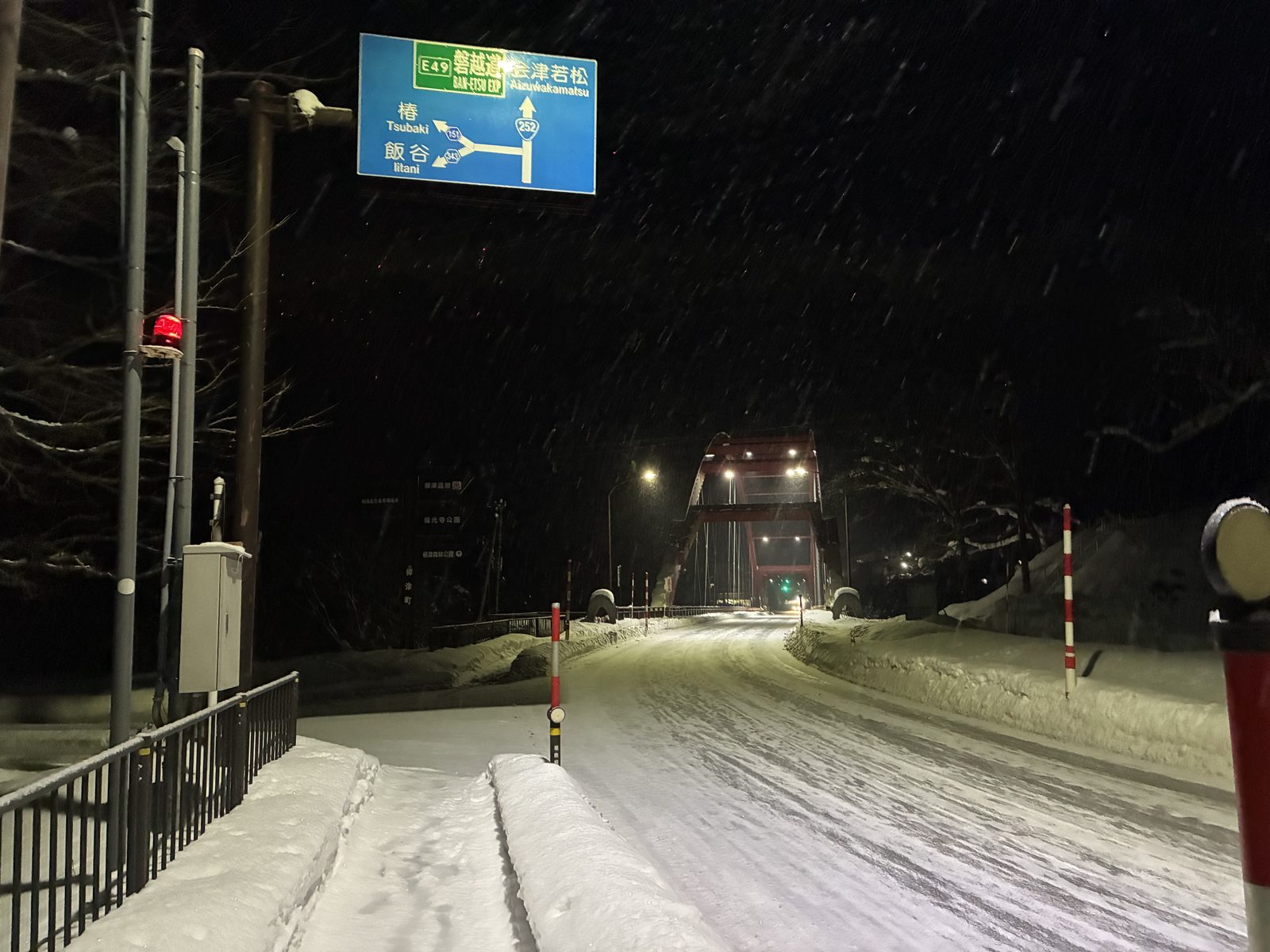
Crossing a red bridge lit up in the headlights, the only sound was snow hitting the windscreen. When the sat-nav said you are near your destination, what it meant was the entrance to a very, very quiet town.
Yanaizu at night
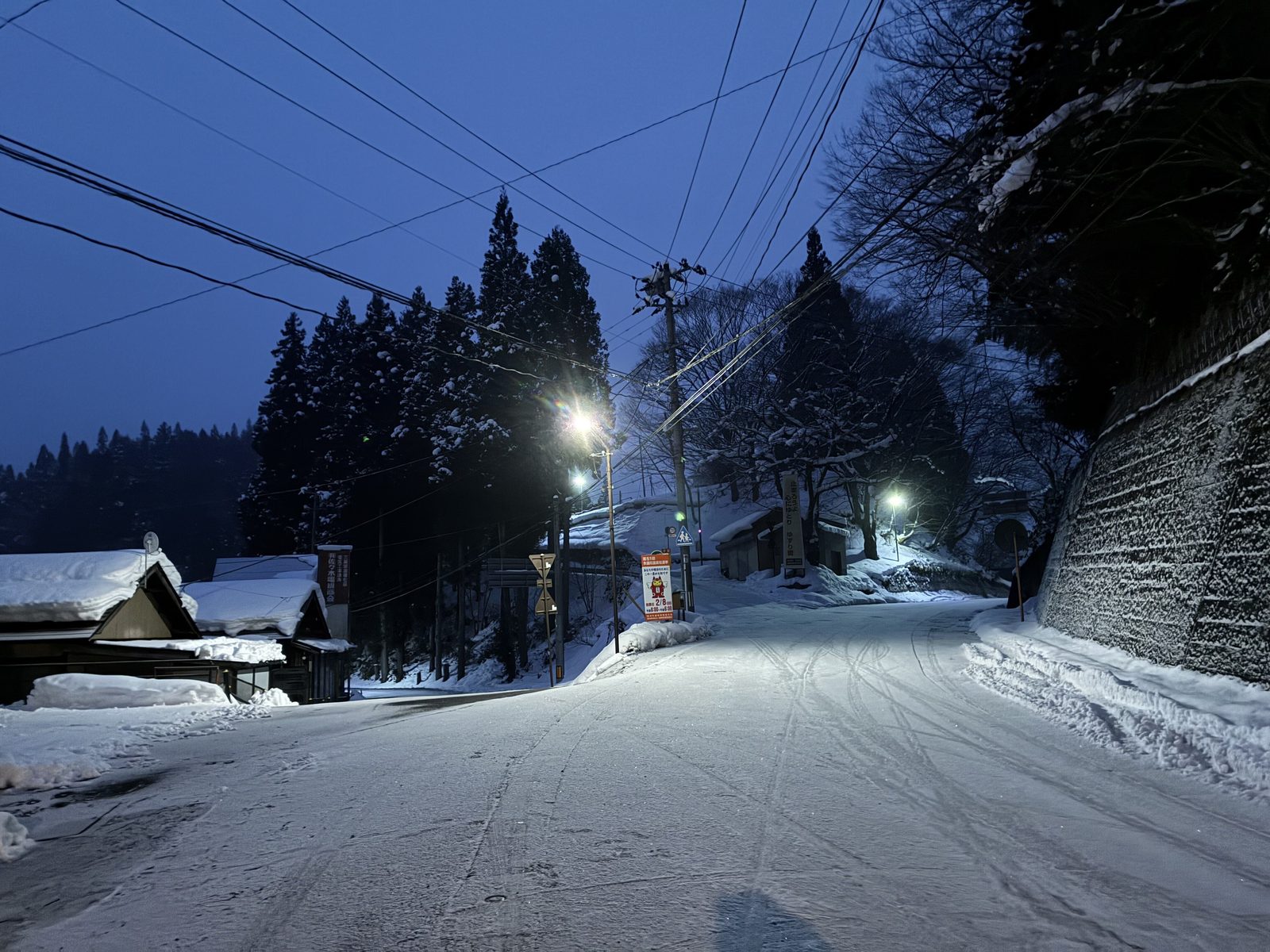
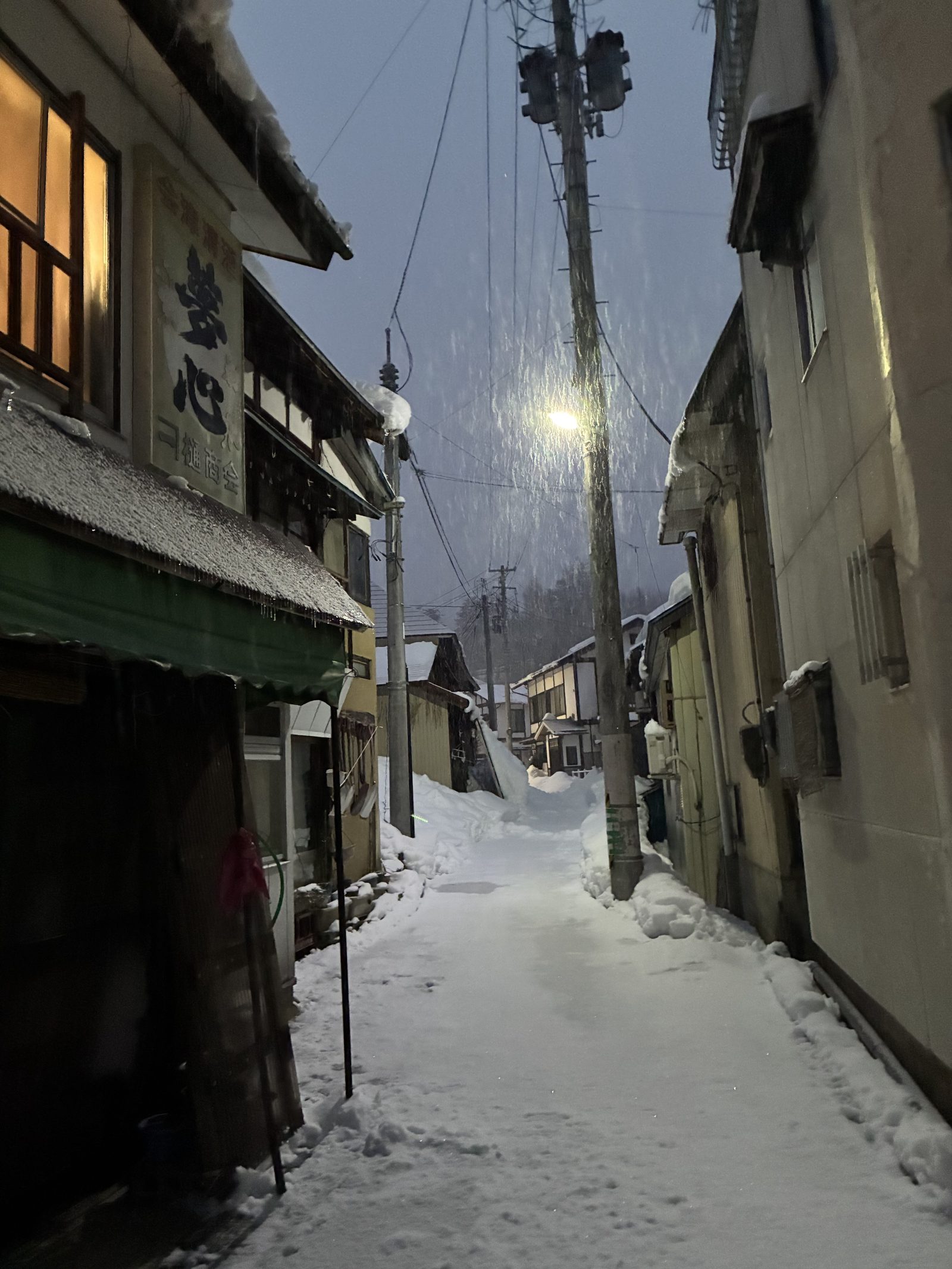
I left the car at the inn and went for a short walk in the dark.
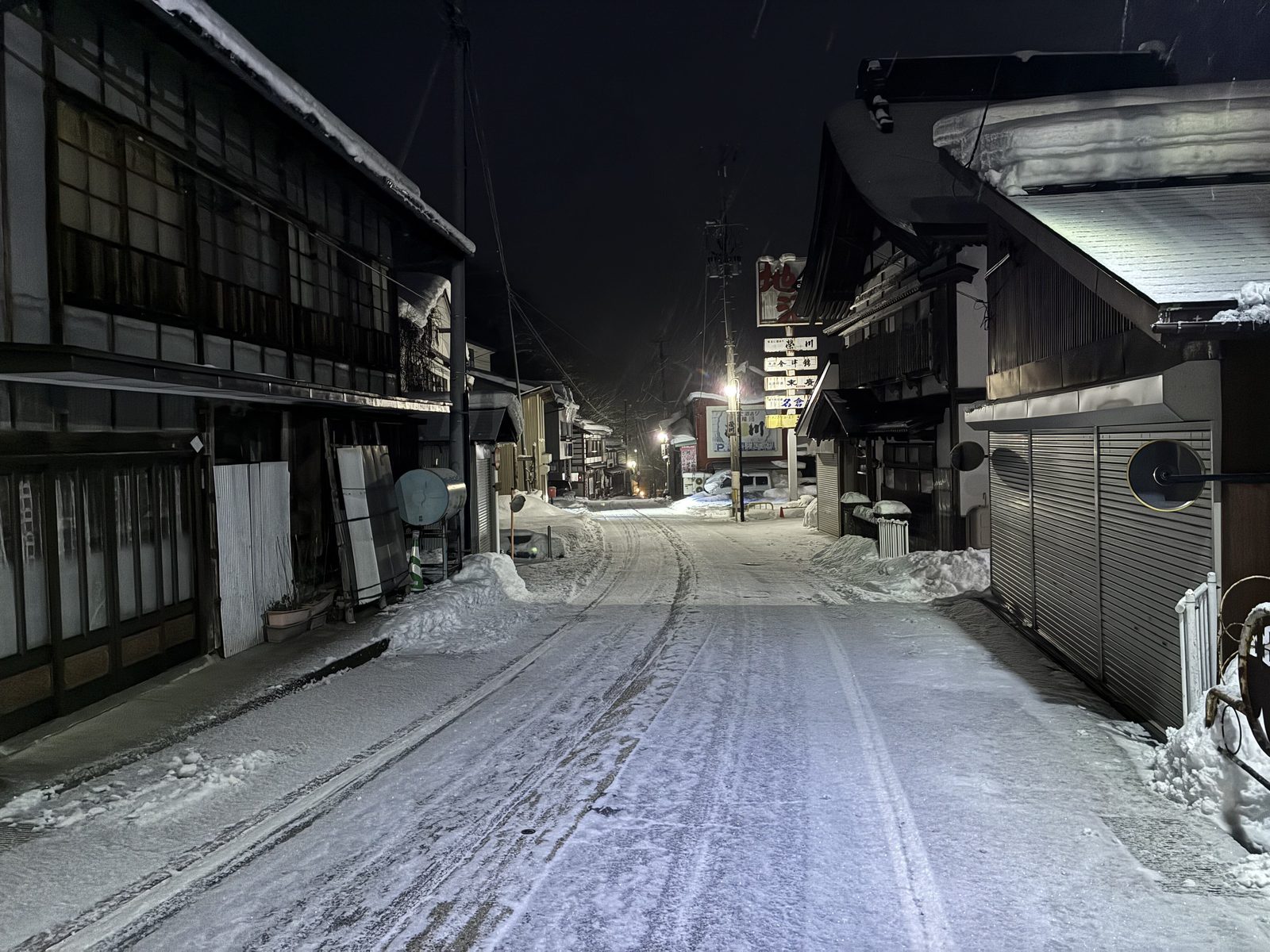
Snow coming down steadily, a street of old wooden buildings, almost every shop shut. The streetlights bounce off the snow, so the whole world glows a soft, blurry orange.
Nobody around. Genuinely nobody — quiet enough that for a second I wondered whether anyone actually lives here.
But it isn’t frightening, oddly. You just hear the snow, continuously, and the place feels like it’s breathing.
Enzōji, on the edge of a cliff
The main reason I came was Fukuman Kokūzōson Enzōji — an old temple sitting on a cliff above the Tadami River.
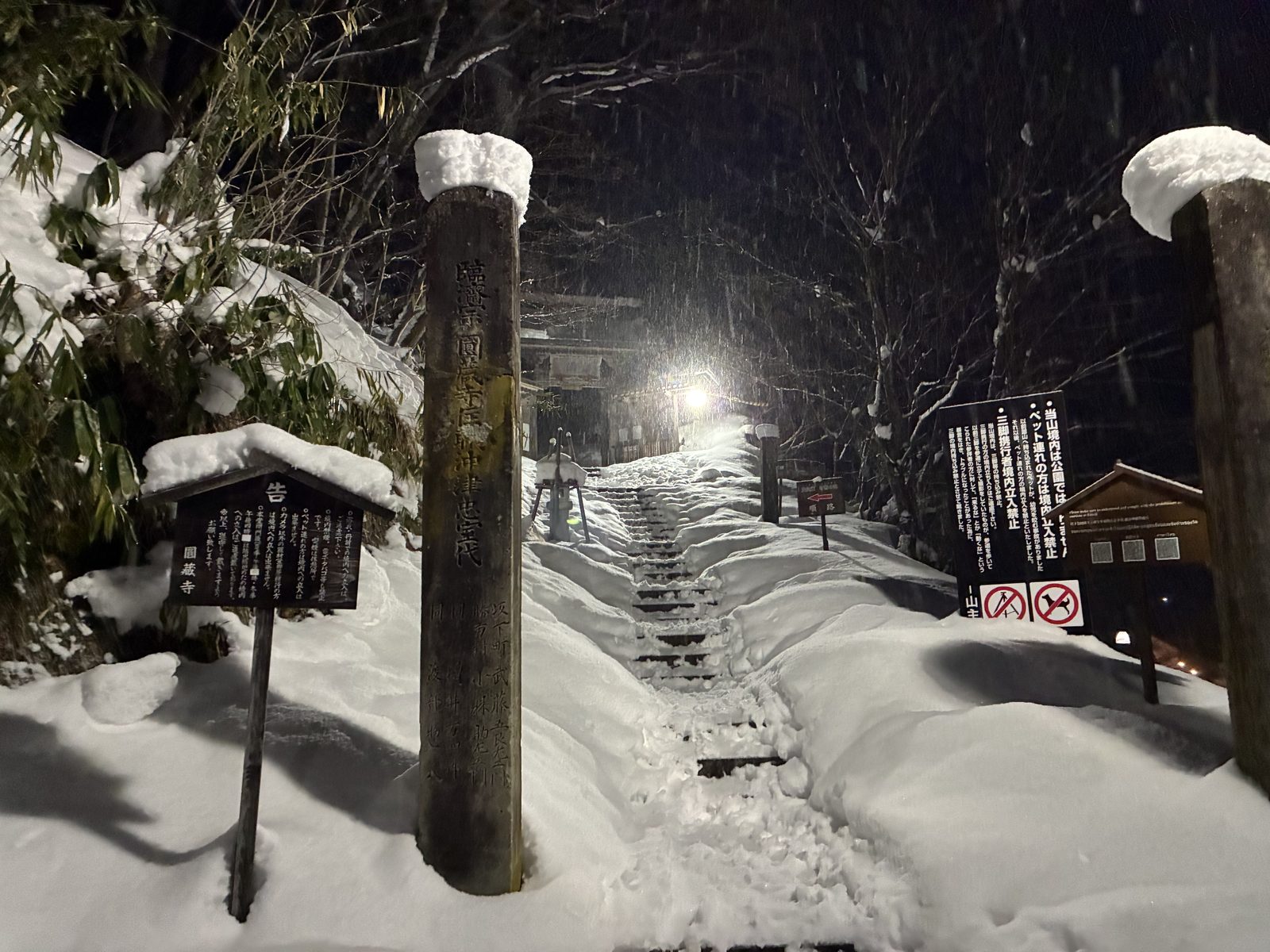
The approach had been cleared, leaving one narrow lane with snow up to your hips on either side. I climbed it thinking, how many people have walked these steps today? Three?
The gate
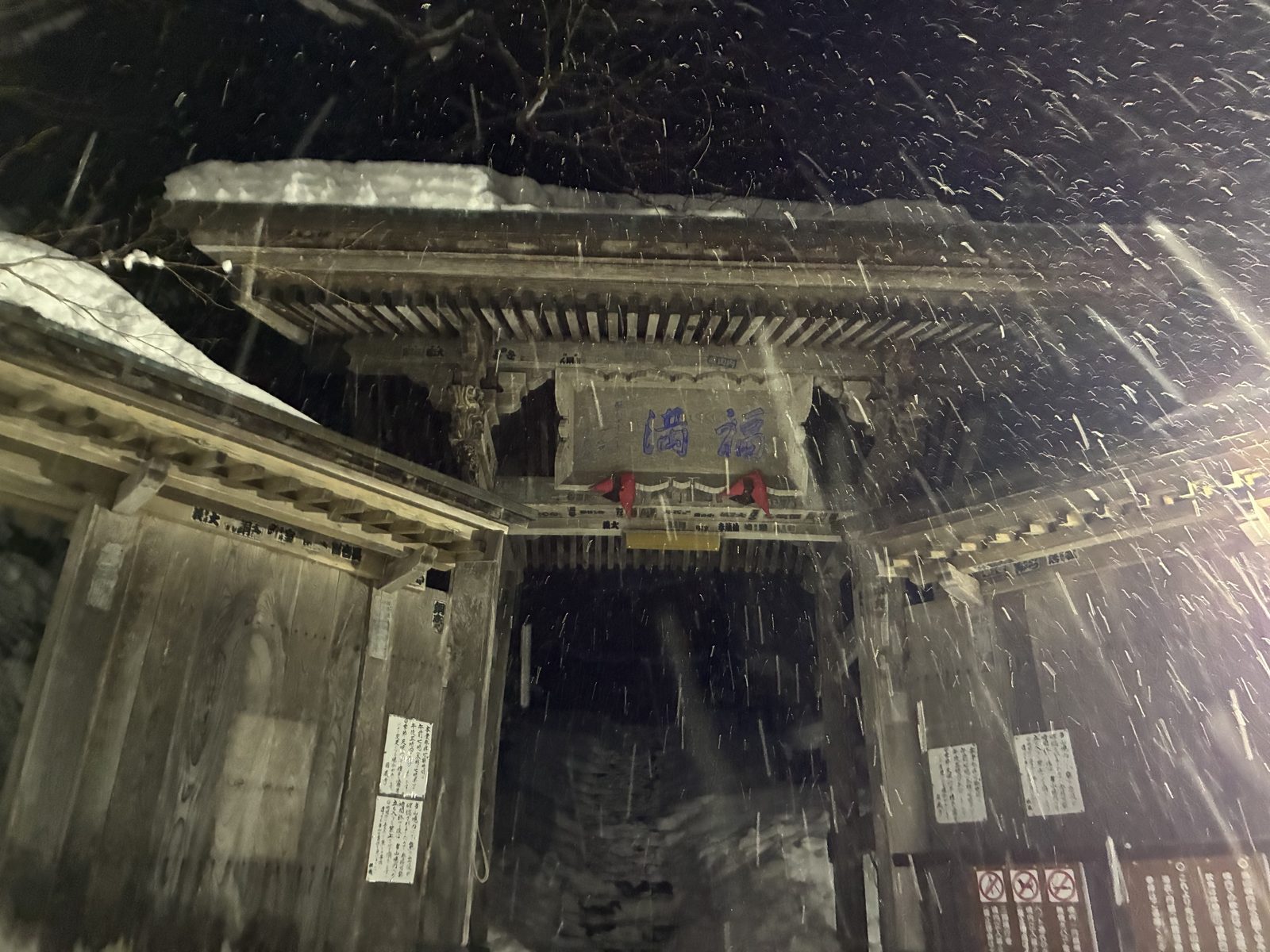
A serious wooden gate appears, and above it the characters 福満 — “filled with fortune.”
The temple is said to have been founded by Kūkai over a thousand years ago, and it’s one of the three great Kokūzō Bodhisattva sites in Japan. I stood there in the blowing snow looking up at that plaque for a while. Filled with fortune — maybe this kind of quiet is what that means.
The hall and two stone lanterns
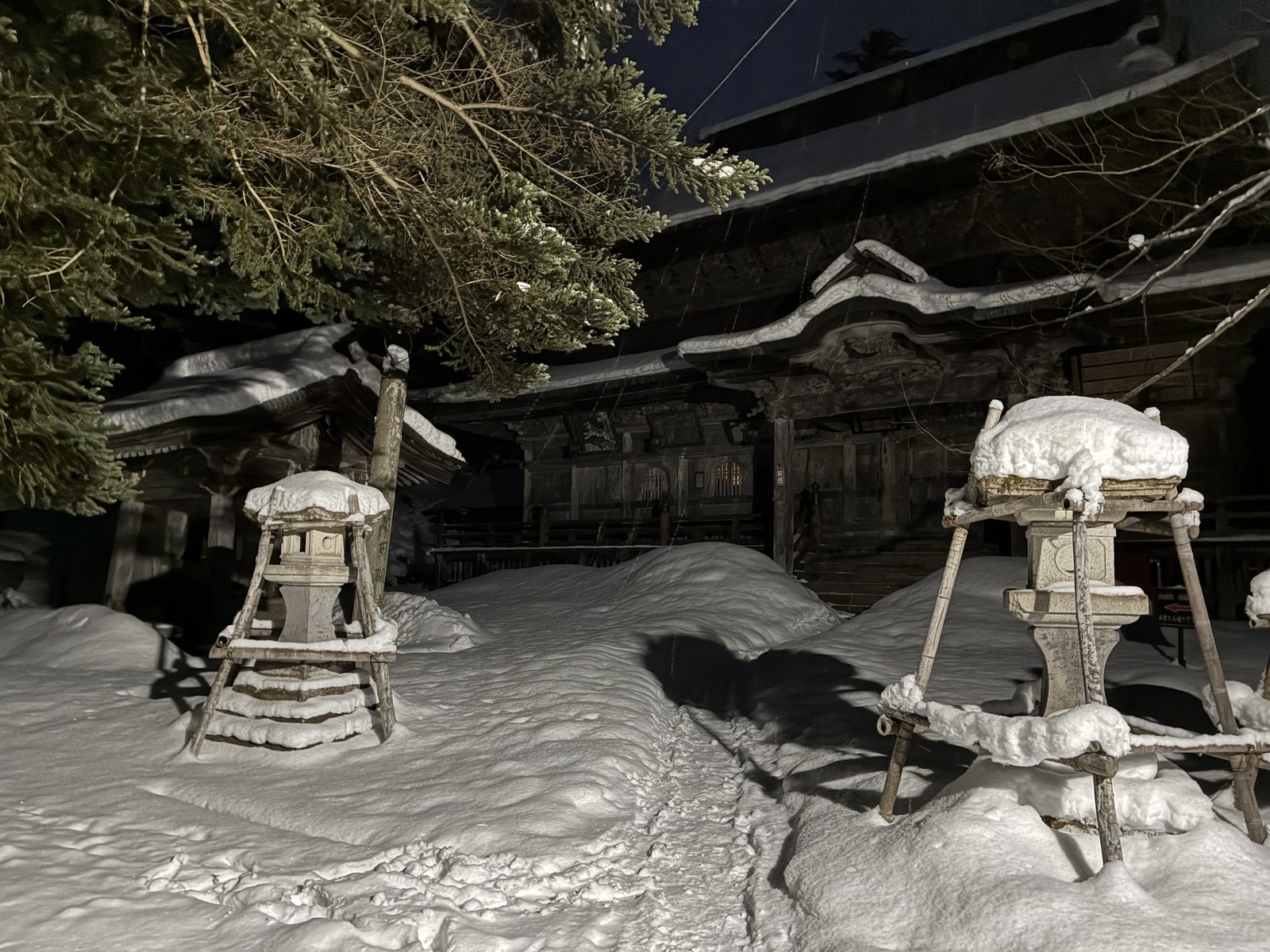
Inside the grounds, two stone lanterns stood wearing thick caps of snow. They looked like two old men in white hats, which made me laugh.
Behind them the main hall is black, severe against all that white. I paid my respects and then just stood there for a bit. No tourists, nobody from the temple. Only the sound of snow.
The next morning
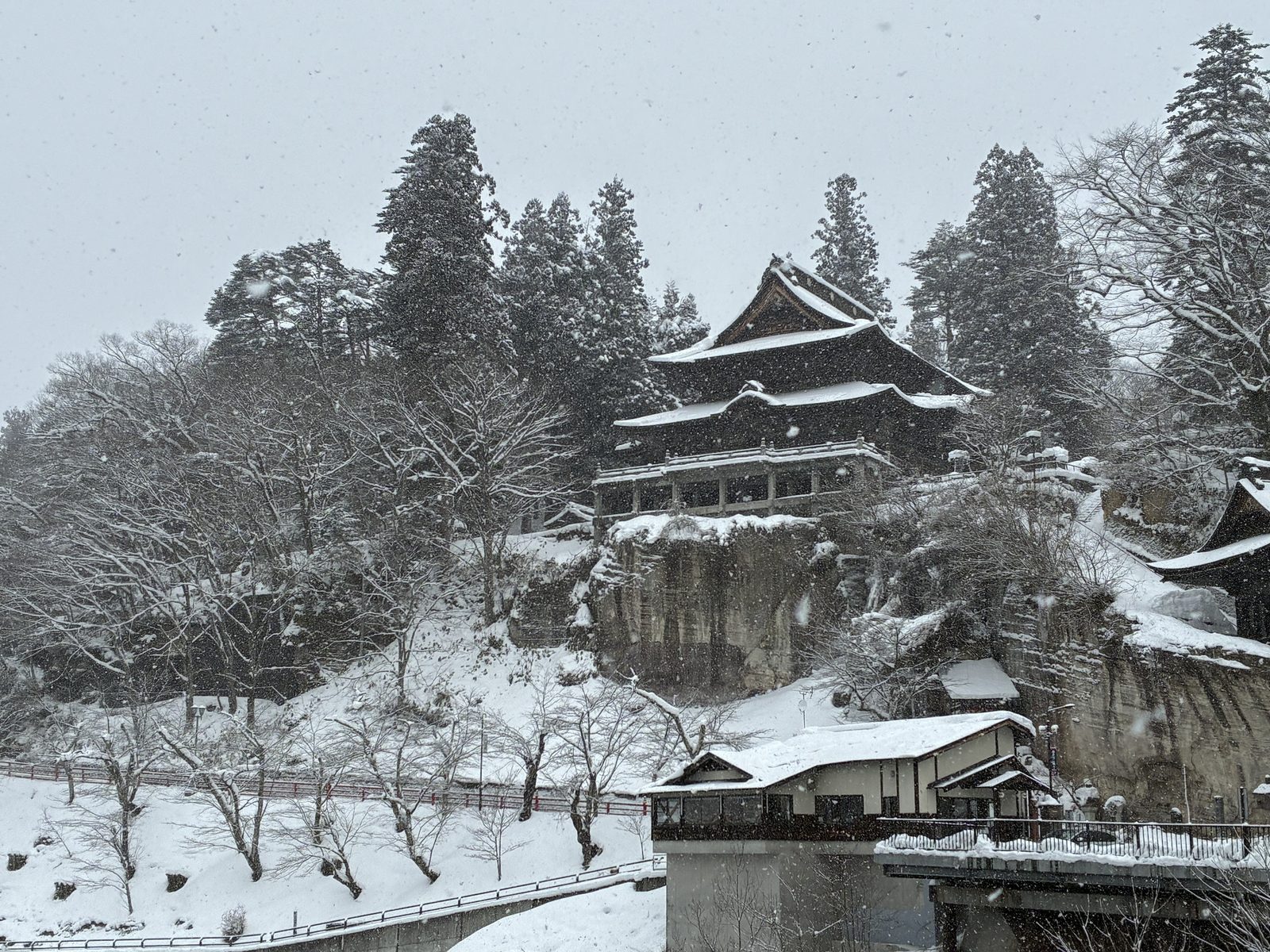
And then the morning. Seen from across the river, Enzōji is simply a painting.
Snow-covered halls on a cliff jutting out over the Tadami River. White snow, black roof, a dull grey sky — a world with almost no colours in it, and the temple standing there completely certain of itself.
Ah, I said out loud to nobody. This is what people mean by the old landscape of Japan.
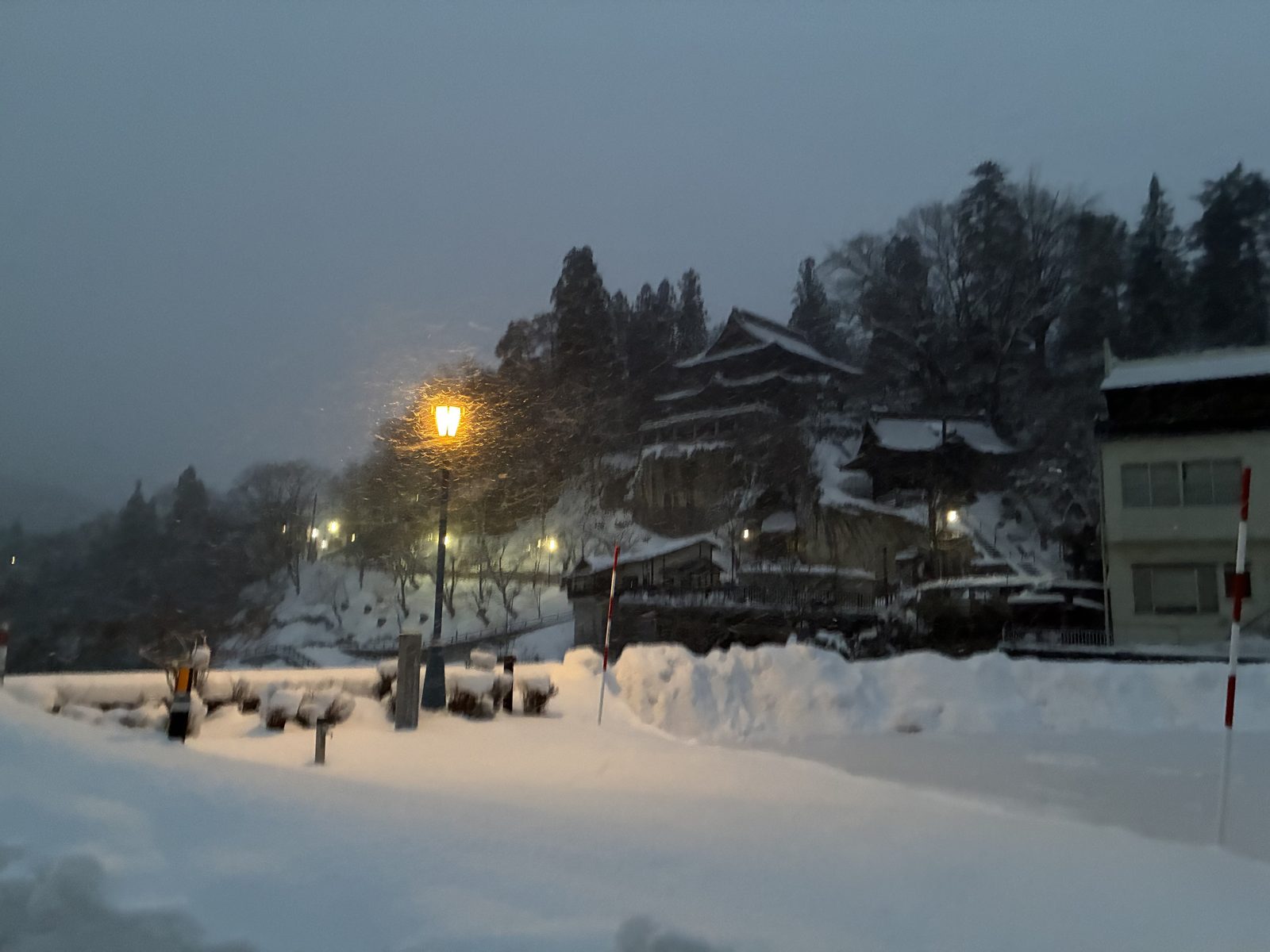
Dusk and dawn, two different faces. That’s the view that stayed with me most.
🐮 The town where the akabeko was born
Did you know this? The akabeko — the little red papier-mâché cow with the bobbing head that you see in every Tohoku souvenir shop — comes from here.
The legend says a red ox helped haul the timber when Enzōji was built. That’s the origin of the toy. Which is why, in this town, there are red cows absolutely everywhere.
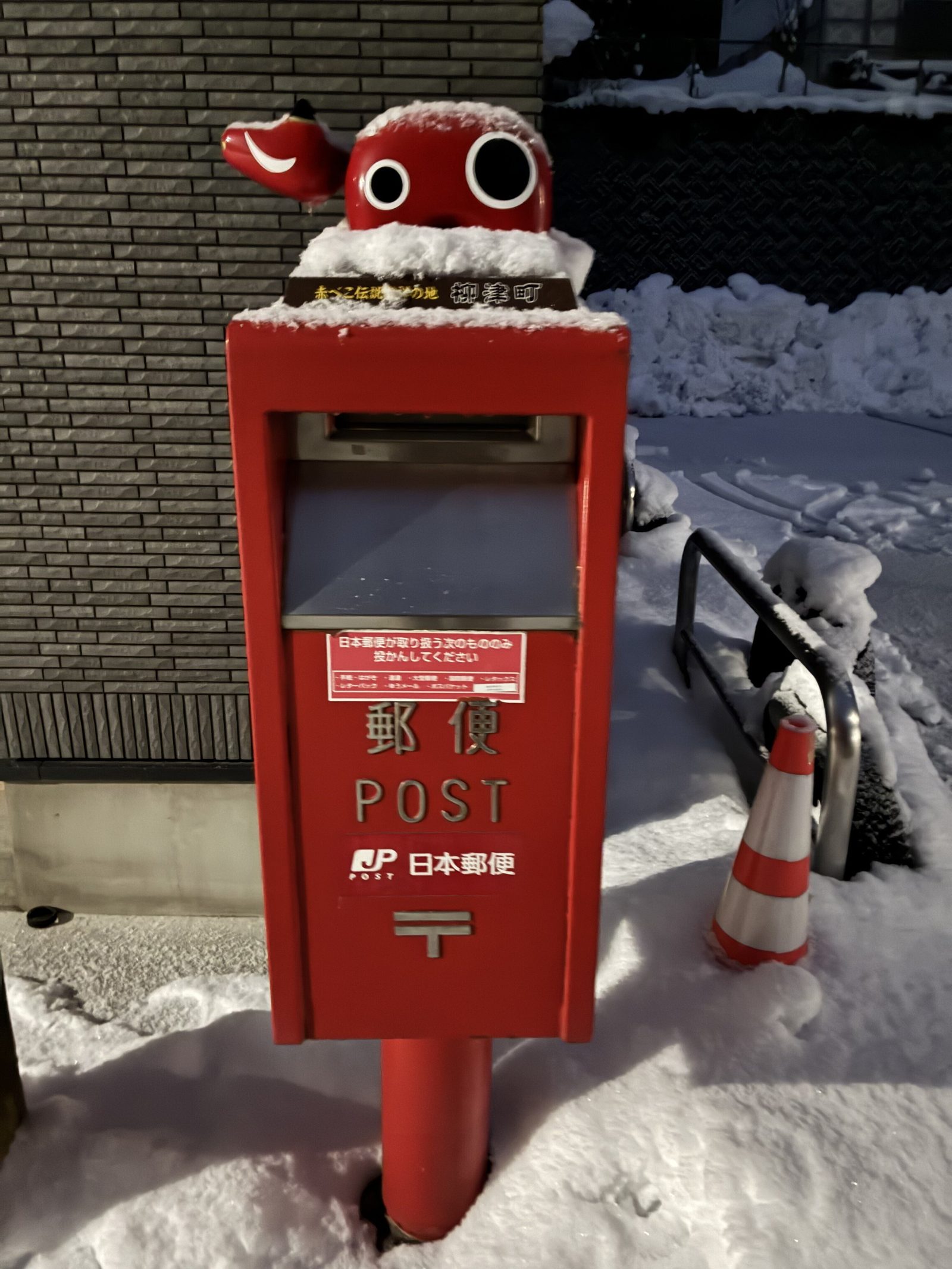
Best of all: there’s one sitting on top of the post box outside the post office. Wobbling head, big round eyes, the real traditional craft version. I walked past it and said out loud, to no one, there’s one there as well?
Iwaiya and the original awamanjū
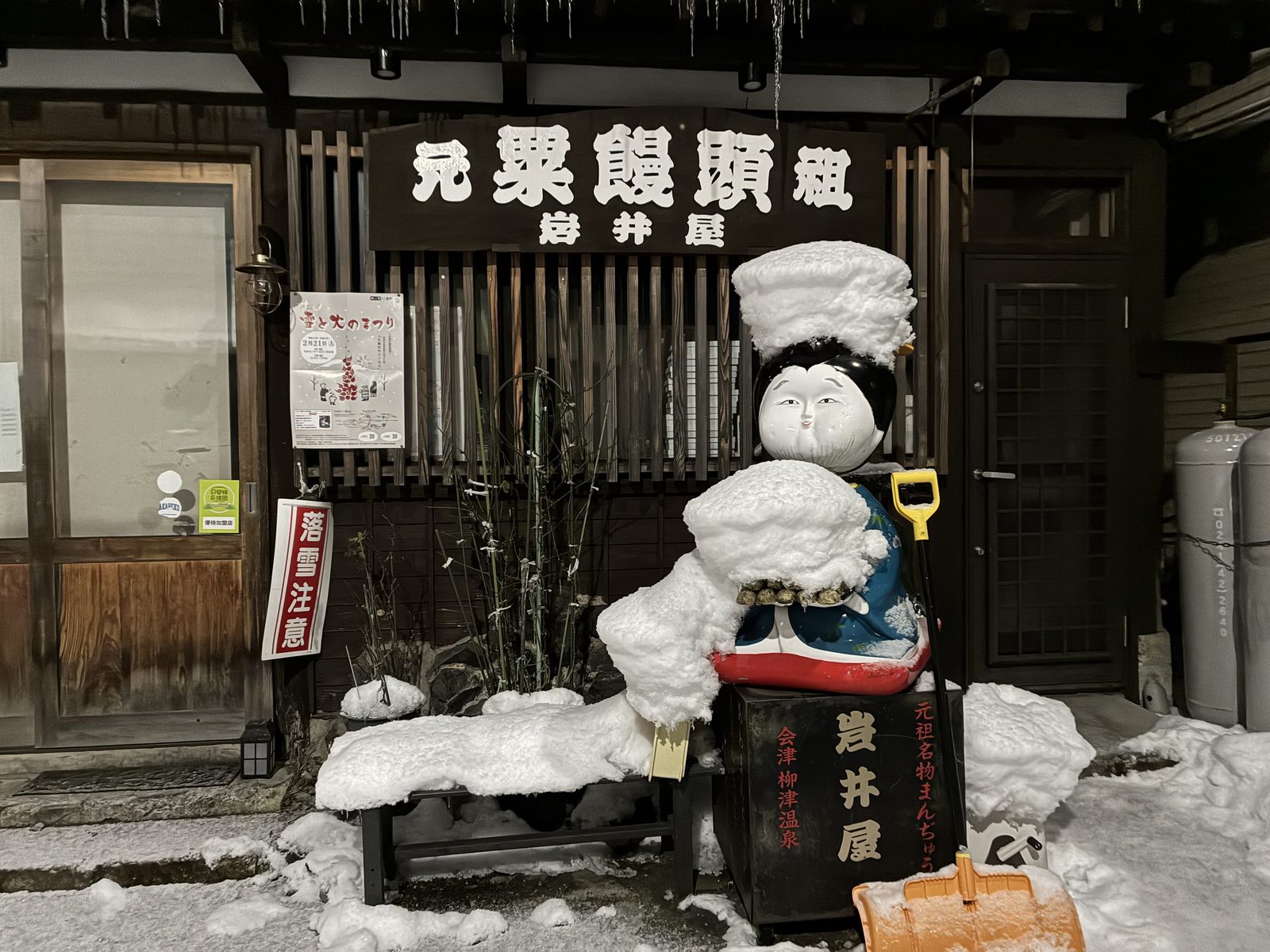
The other thing Yanaizu is known for is awamanjū — steamed buns made with millet.
Outside the shop stands a “manjū girl” figure, half buried in snow. Iwaiya is the original house, still sitting there through the winter.
Fresh out of the steamer, the millet gives it a slight graininess, the skin is chewy, and inside is sweet red bean. Plain, gentle food. Eating something warm with cold hands — that’s snow-country wisdom, I think.
🌉 The red arch bridge
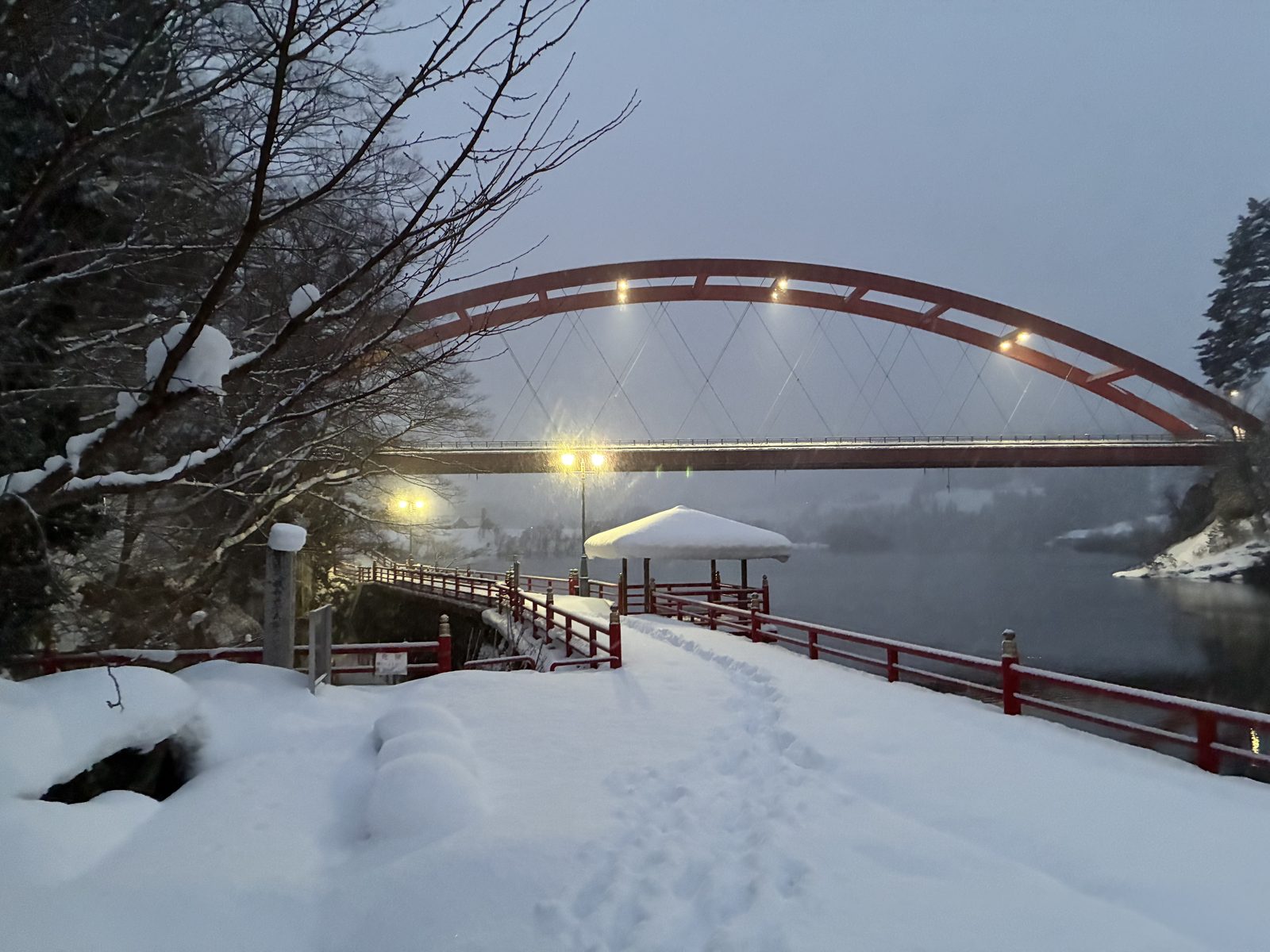
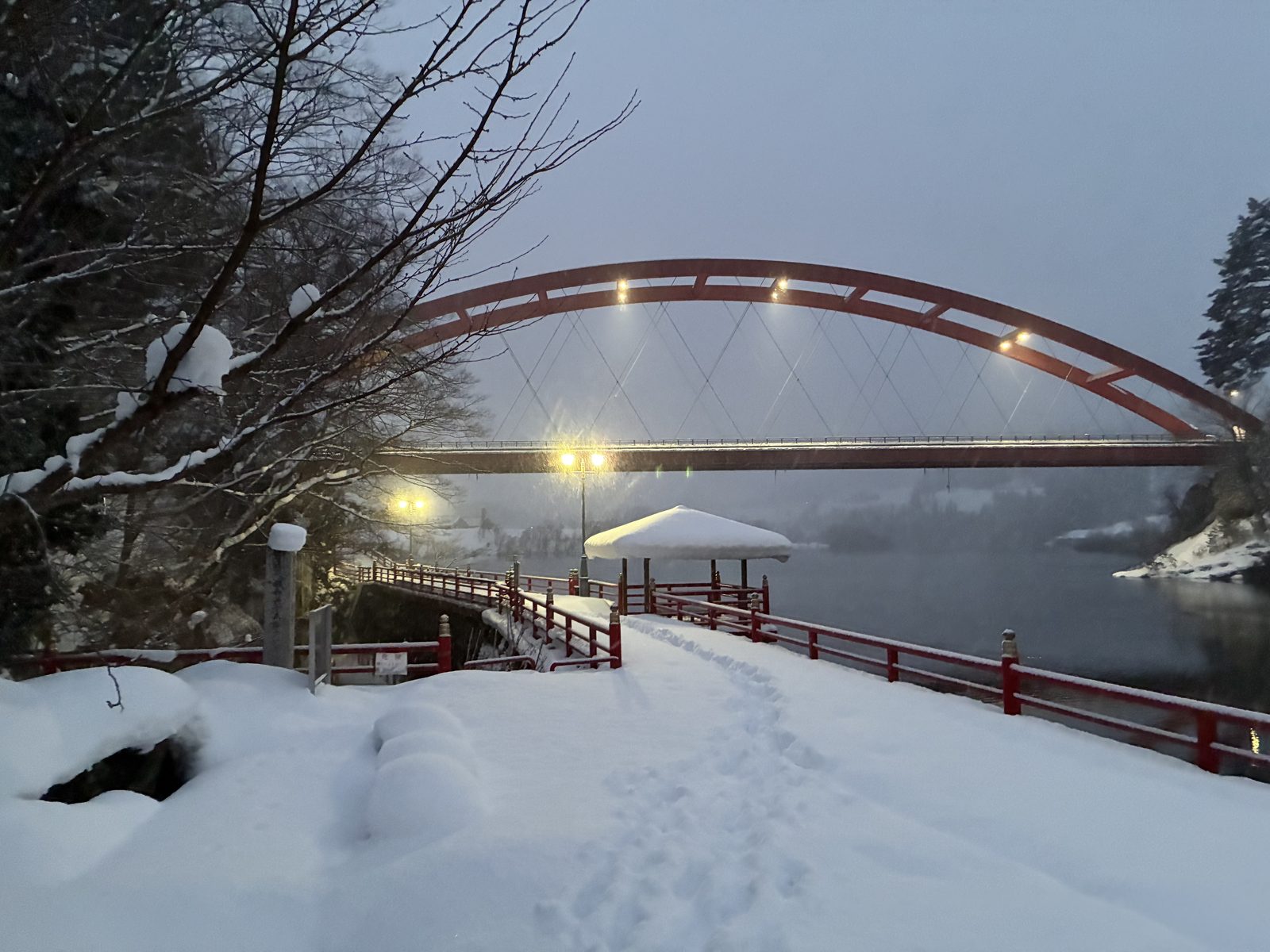
A short walk from the inn there’s a red arch bridge over the Tadami River.
In all that snow, the vermilion of the bridge is the only thing with any colour. There’s a little pavilion on the bank with snow piled on its roof, like an illustration from a storybook.
Enzōji from below, the town through the bridge — every direction is a picture. I spent much more time just standing and looking than actually taking photos.
♨️ Seiryū-no-Yado Kawachi
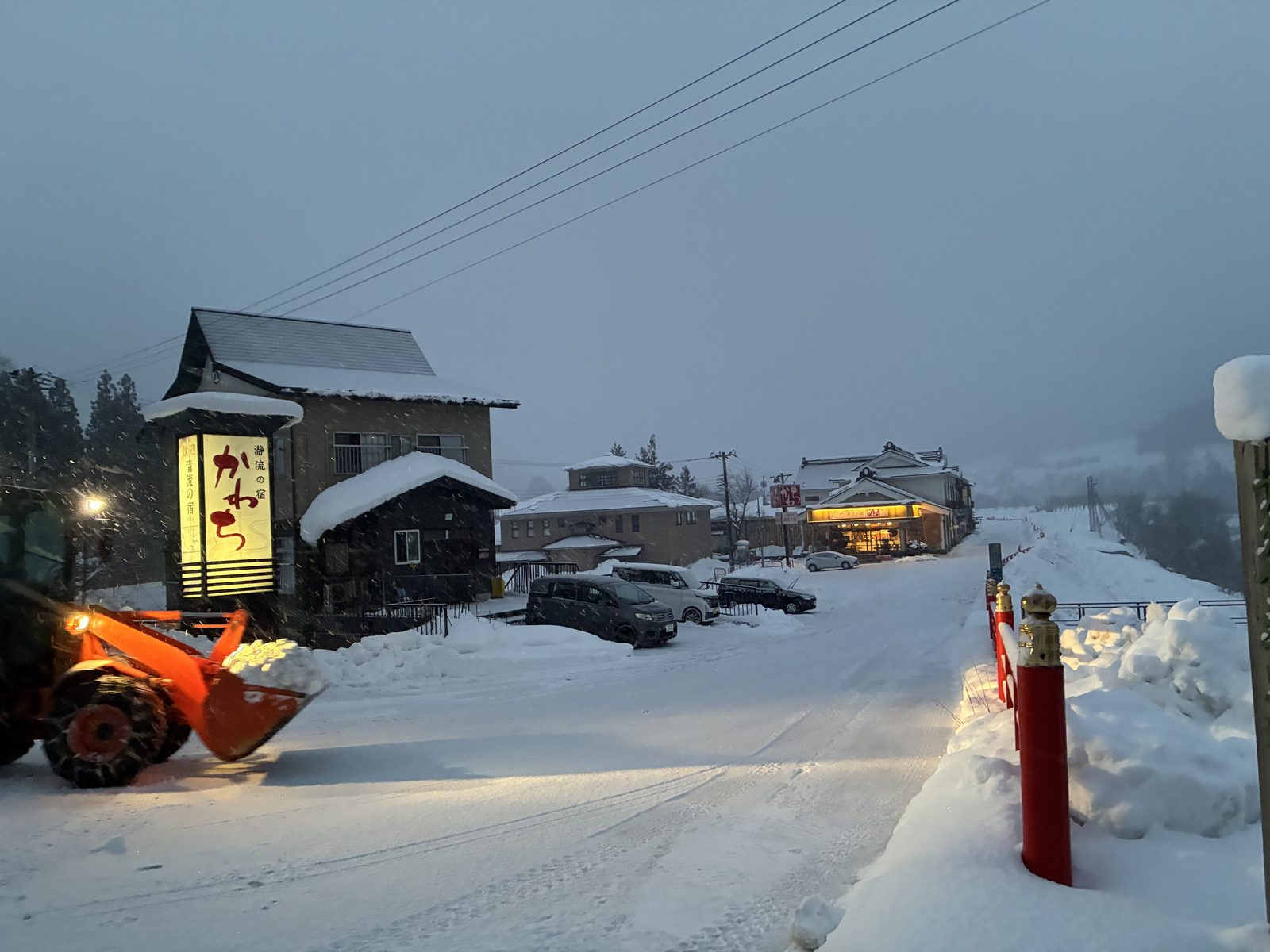
Tonight’s inn: Kawachi.
A car park buried in snow, the sound of the machine clearing it, warm light on the sign. I parked, opened the door, and made an involuntary noise.
The tsurushi-bina in the lobby
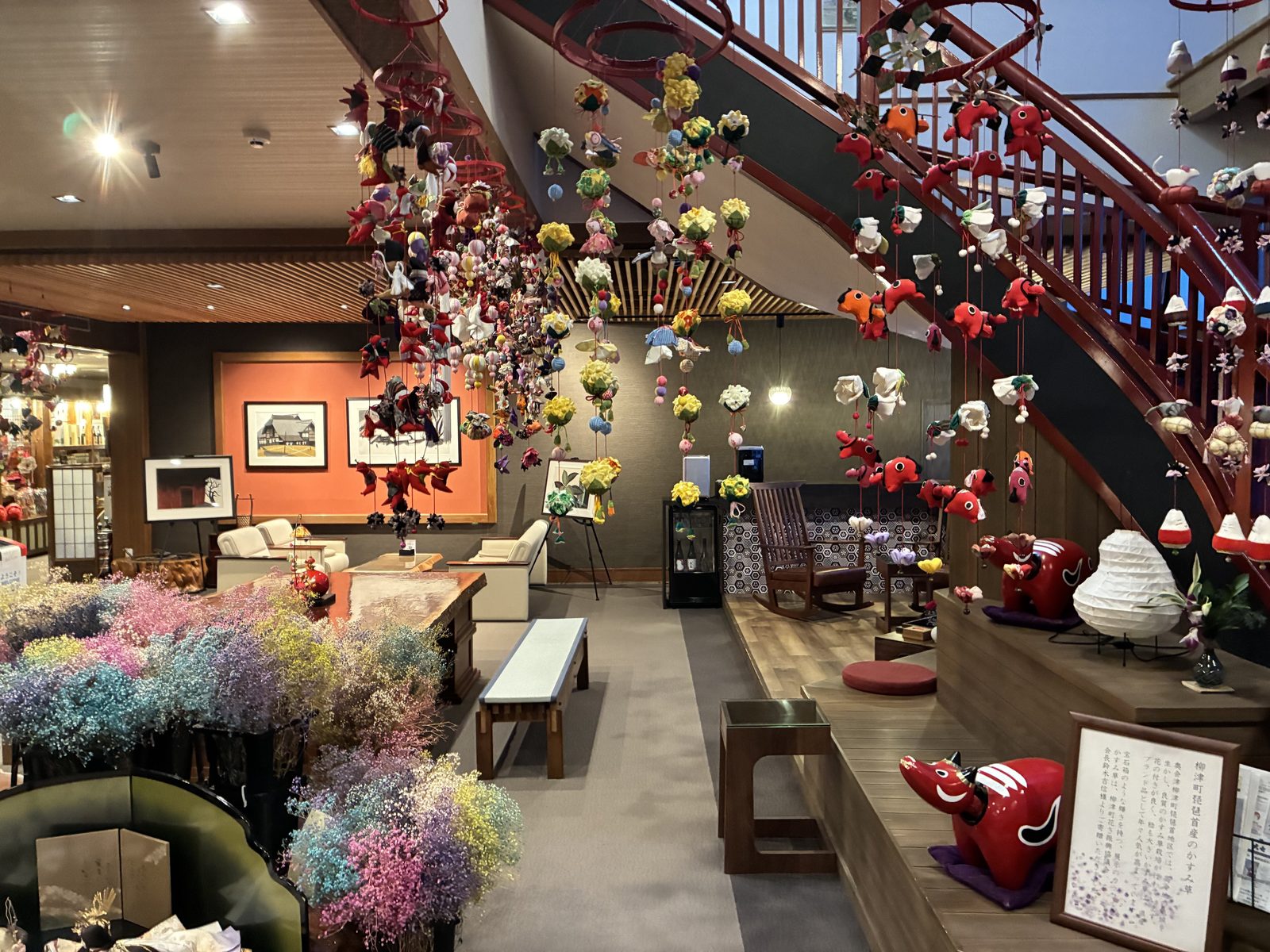
The whole lobby ceiling is hung with tsurushi-bina — colourful hand-stitched ornaments traditionally displayed around the Doll Festival. Pink, red, yellow, purple. Cloth temari balls, little pouches, charms. Along the banister, around the pillars.
It was winter, edging towards spring. After hours of nothing but white, walking into a sea of colour like that stopped me where I stood.
And of course, more akabeko
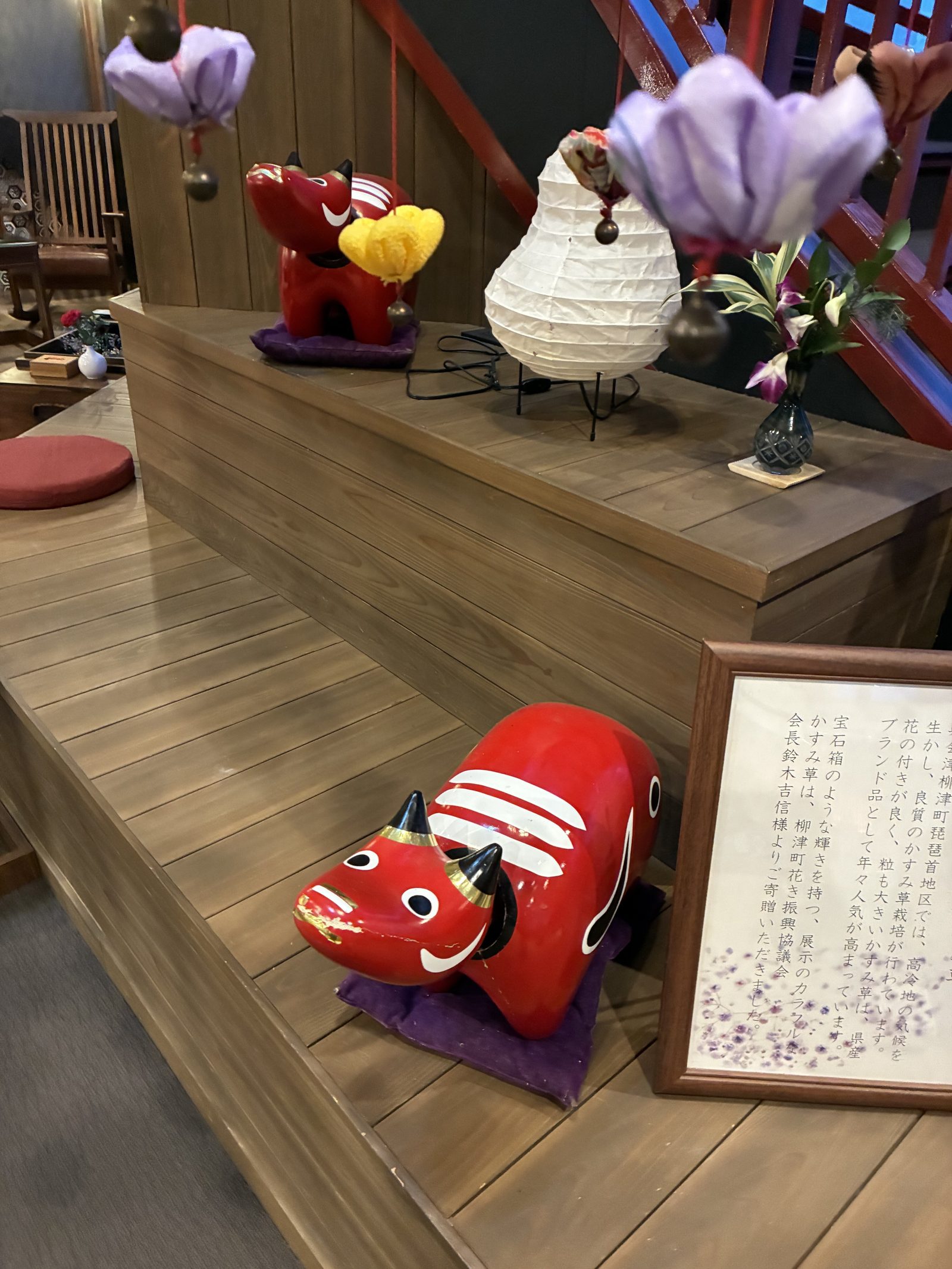
In one corner of the lobby: a big akabeko, small ones, one wearing a yellow hat. The full cast.
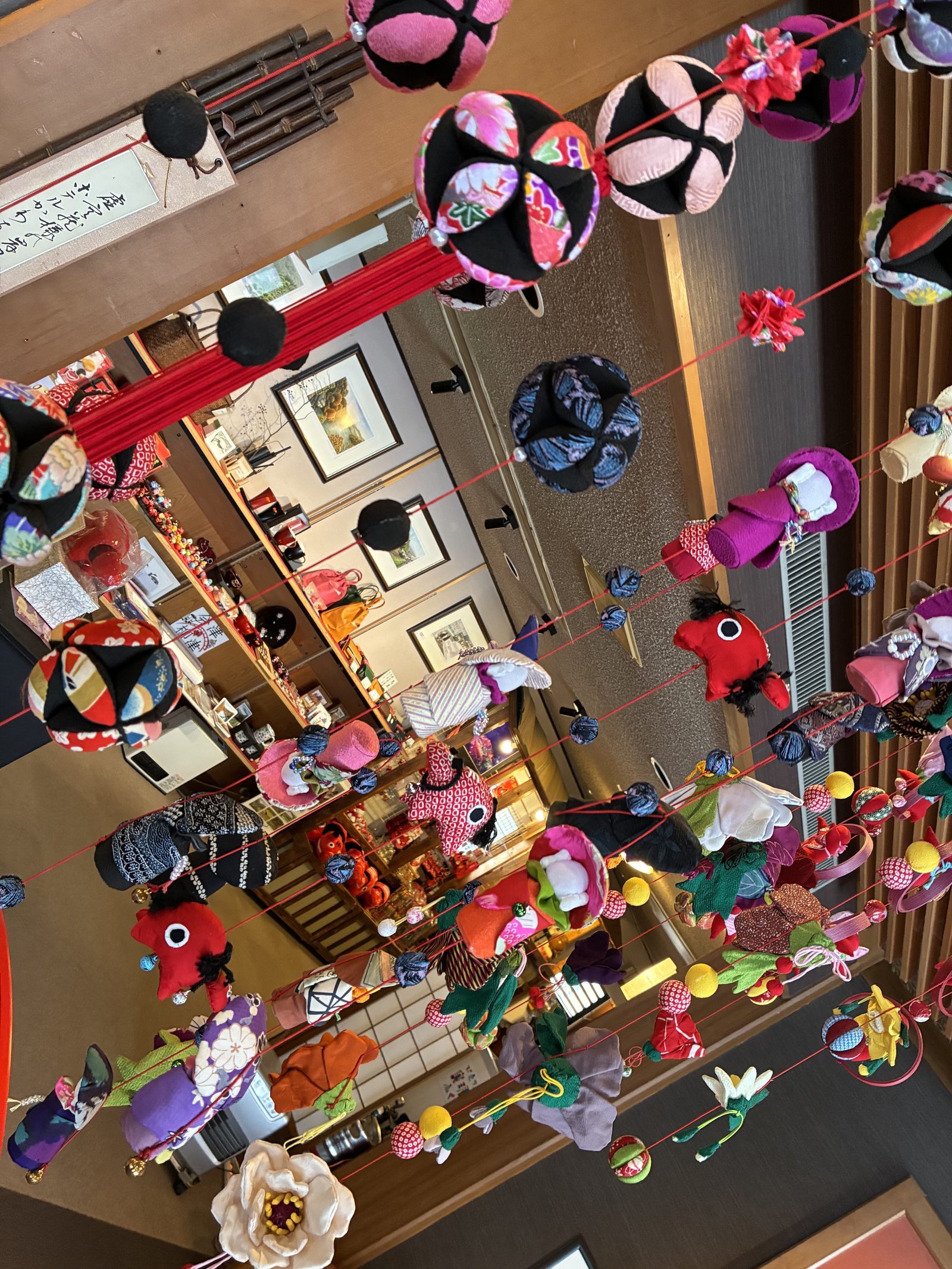
For the people who live and work here, I don’t think these are a display for tourists. They’re just something they’re fond of. Once that clicked, the whole place felt closer.
🍶 Dinner — Aizu food, Aizu sake
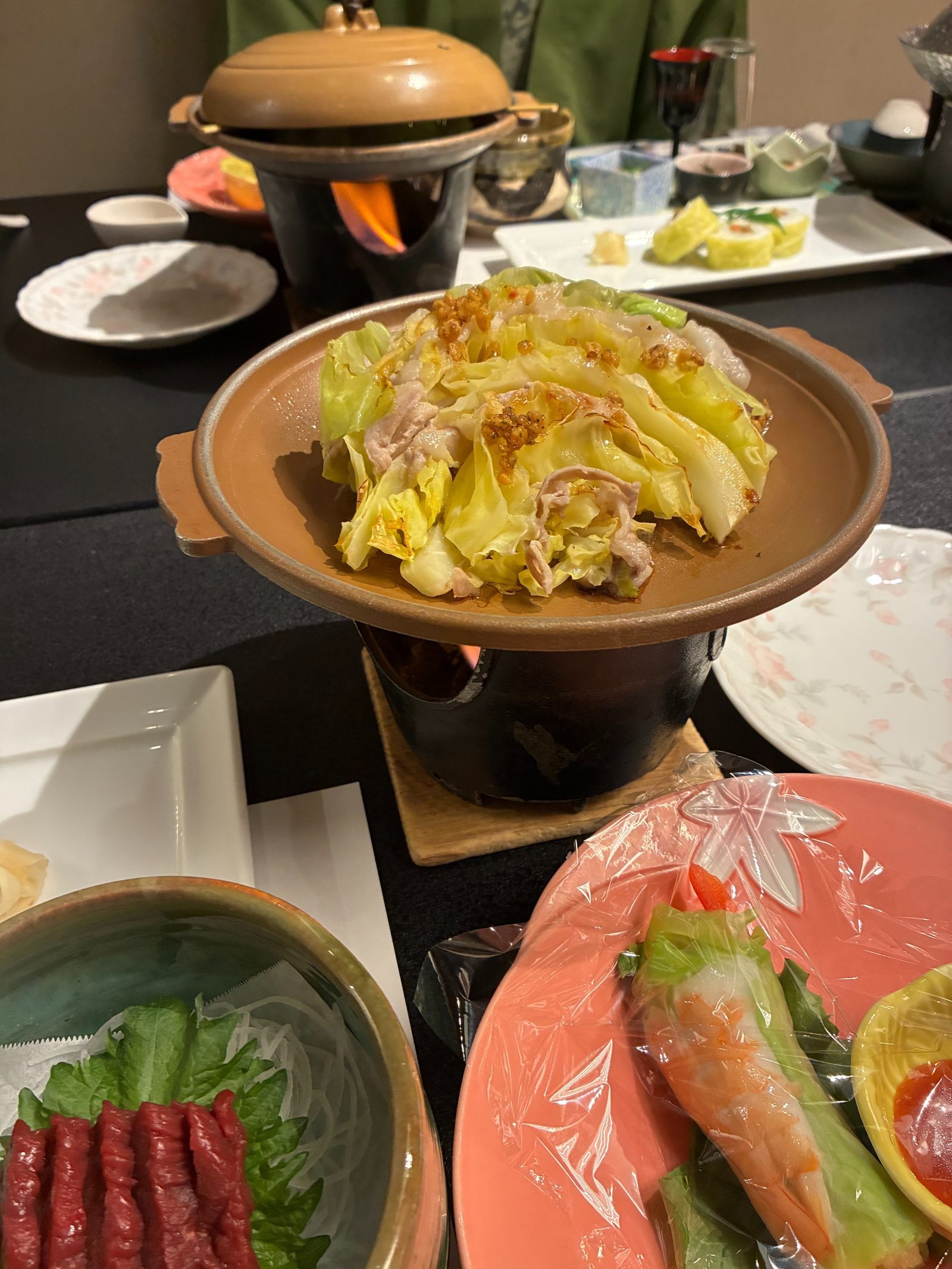
Dinner came to the room: cabbage and pork belly steamed in a clay pot, spring rolls on a cherry-blossom-pink plate, and — of course — Aizu’s famous raw horse sashimi. The cabbage grows under all that snow, which is exactly why it’s so sweet.
And then the thing I was most pleased about all evening: the three-sake tasting set.
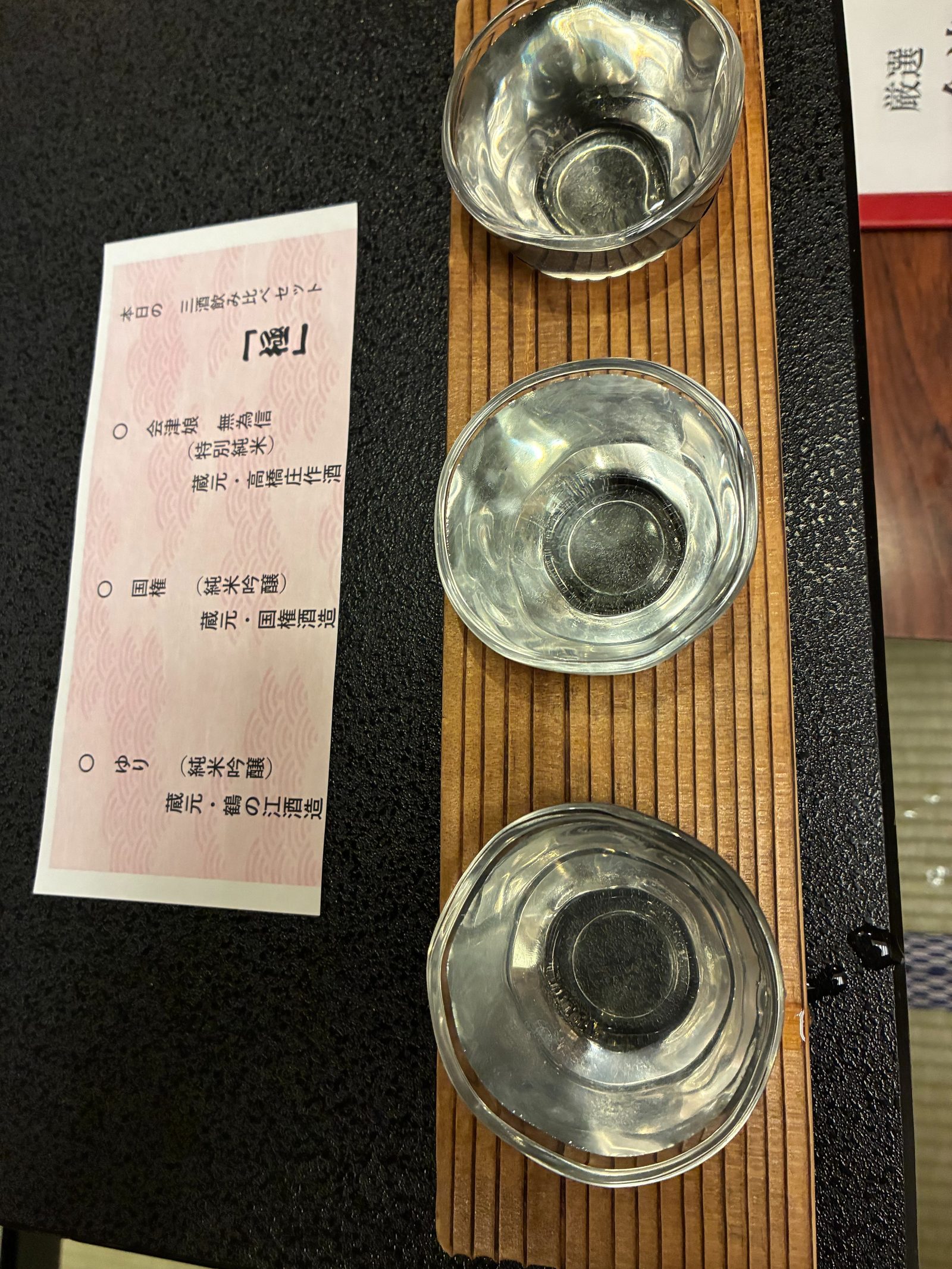
All three from Aizu breweries, which is the good bit:
- Aizu Musume “Muishin” (tokubetsu junmai) — Takahashi Shōsaku Shuzō
- Kokken (junmai ginjō) — Kokken Shuzō
- Yuri (junmai ginjō) — Tsurunoe Shuzō
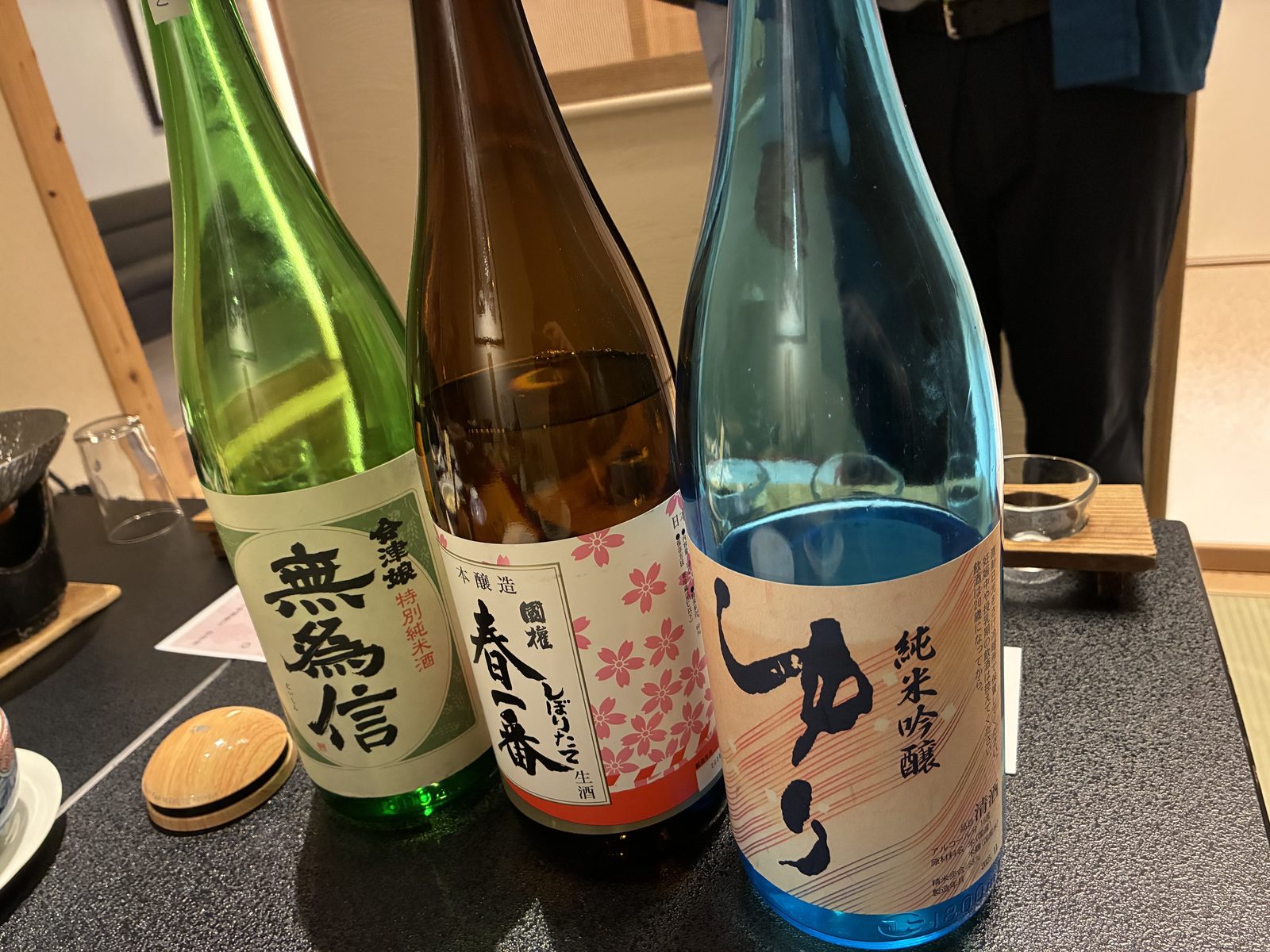
They’re completely different characters, which is the fun of it. Muishin is quiet and straight down the middle. Kokken is a bit showier, a bit spring-like — mine was a seasonal freshly pressed one, with cherry blossoms on the label. Yuri is exactly like its blue bottle: clean and clear.
Local food, local sake, in a place where the local people are. There isn’t a more luxurious thing to do on a solo trip.
Morning at the inn
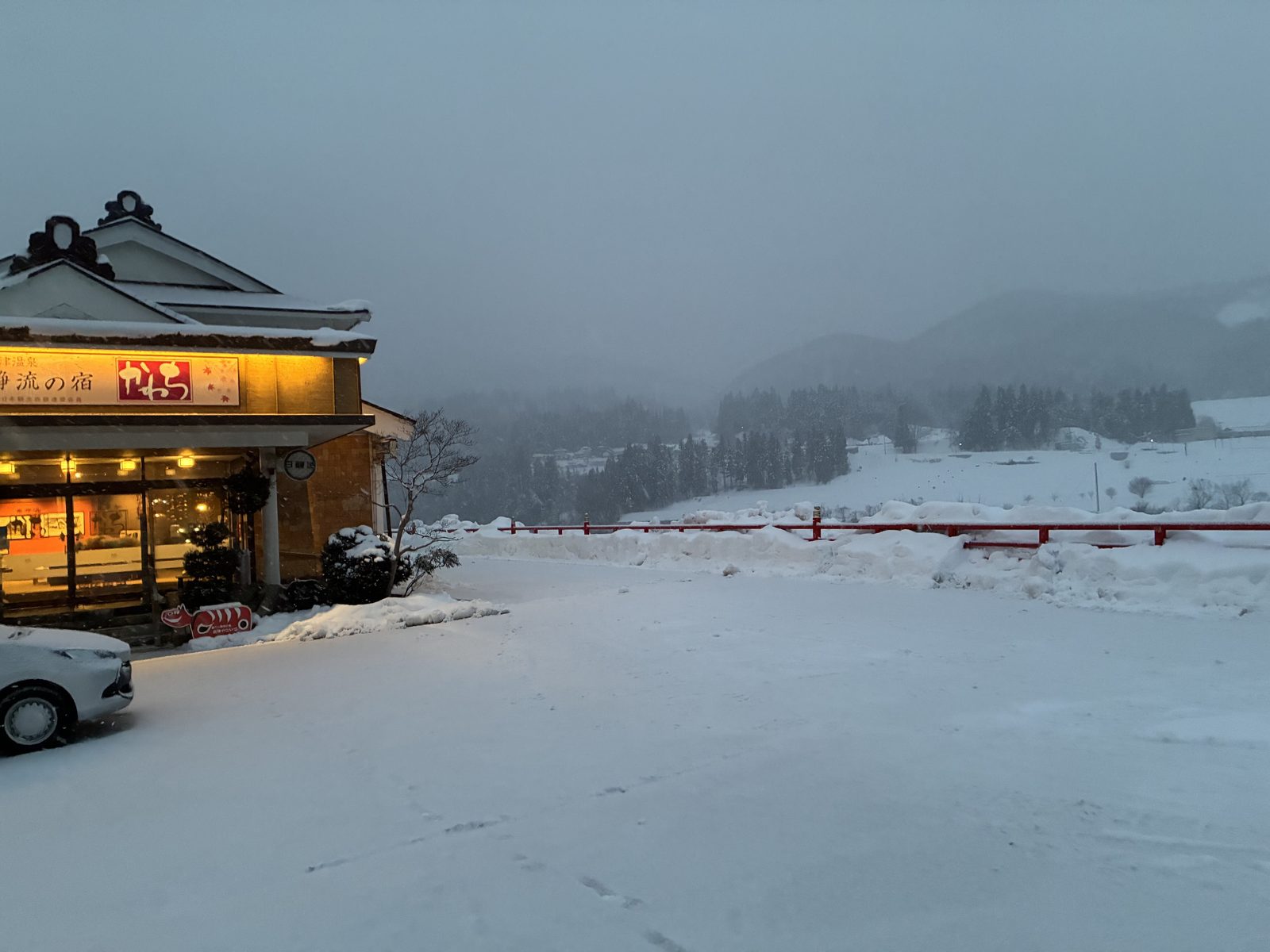
Next morning I stepped outside and it was snow as far as I could see. The mountains, the rice fields, the river — all joined up in white. Right. I really am in snow country.
How I actually do it
- Drive, if you can. Tokyo → Tōhoku Expressway → Kōriyama JCT → Banetsu Expressway, off at Aizu-Bange IC (the closest), then about 20 minutes on routes 49 and 252. Three to three and a half hours.
- Winter tyres are not optional here. Late November to March, snow tyres or chains. If you aren’t used to driving on snow, arrive while it’s still light. I mean it.
- The train is genuinely worth it if you have time. Shinkansen to Kōriyama → Banetsu-West Line to Aizu-Wakamatsu → the JR Tadami Line to Aizu-Yanaizu, then ten minutes on foot to the temple. The Tadami Line gets called one of the most beautiful railways in the world, and in winter it earns it. But services are sparse — renting a car at Kōriyama is the easier version, and rentals there come on snow tyres as standard.
- Don’t count on finding dinner. There are only a handful of restaurants in town. Book the meal at your inn.
- Boots with grip, not just warm ones. I fell over. Learn from me.
- Anything you want to ask about Aizu, message me. Which season, how to get there, whether the roads are fine — all of that is welcome.
In the end
Driving back down the expressway towards Tokyo, the same sentence kept going round my head: I didn’t know a place like this existed.
Yanaizu, Oku-Aizu. Five thousand people, deep snow, very quiet. Home to one of the three great Kokūzō temples, birthplace of the akabeko, lived in for over a thousand years — people steaming buns, looking after a temple, shovelling snow every winter.
It isn’t a flashy destination. Nobody’s calling it photogenic on social media. But walking alone, listening to snow alone, eating a warm bun alone — there was a thickness to that time that I can’t quite describe.
When I’ve got a bit more time, I’ll come back. One more place on that list.
If you like snow, or quiet, or you’re just a bit tired and want to stand still for a while — Oku-Aizu. I’d go.
🇯🇵 日本語版
冬の真ん中、なんとなく「雪深いところに行きたい」って気持ちになることってない?
2026年の1月、ふと思い立って、車で福島へ向かった。目的地はあえて決めず、磐越自動車道をひた走って、降りた先は奥会津・柳津町(やないづまち)。
正直、行くまで「柳津」って読み方すら自信がなかった。でも、行ってみたら── 「こんなところがあったんだ」って、何度もつぶやくような旅になったんだ。
磐越道を抜けて、雪の国道252号へ
高速を降りると、空気が変わった。国道252号に乗ると、そこはもう、すっかり雪国。道路沿いの標識には「会津若松」「椿」「飯谷」── 聞いたことのない地名が、雪に半分埋もれて並んでる。
ライトに照らされた赤い橋を渡るとき、フロントガラスに雪がぶつかる音だけが響いてた。ナビが「目的地周辺です」って言ったのは、本当に静かな静かな町の入り口だったよ。
着いた、柳津という町
宿に車を置いて、夜の街を少し歩いてみた。
しんしんと雪が降る中、古い木造の建物が並ぶ通り。営業してるお店はほとんど閉まってて、街灯の光が雪に反射するから、世界がぼうっと柔らかいオレンジ色に光ってた。
人がいない。本当にいない。「ここ、住んでる人いるのかな…」って一瞬不安になるくらい、静か。
でもね、不思議と怖くないんだ。雪の音だけがずーっと聞こえてて、なんていうか── 「ちゃんと、土地が呼吸してる」って感じがする。
圓蔵寺 ── 崖の上の名刹へ
柳津に来た一番の目的は、福満虚空蔵尊 圓蔵寺。只見川を見下ろす崖の上に、ぽつんと建ってる古いお寺だよ。
参道は除雪されて、ひと筋の道だけが残ってる。両脇は腰の高さまで雪。「この階段、人が通ったの今日で何人目だろう」って思いながら、しゃっしゃっと雪を踏んで登った。
山門の「福満」の額
立派な山門が現れて、見上げると「福満」の文字。空海が建てたと伝わるお寺で、虚空蔵菩薩を祀る、日本でも数少ない大きな霊場のひとつなんだって。
雪が舞い込む中、しばらくその額を見上げてた。「福が満ちる」って、こういう静けさのことかもしれないなって。
本堂と、ふたつの石灯籠
境内に入ると、ふたつの石灯籠が、雪の帽子をかぶって立ってた。「白い帽子をかぶった、おじいちゃんふたり」みたいで、ちょっと笑った。
奥の本堂は黒くて、雪と対比して厳かで。お参りして、しばらくぼーっと立ってた。観光客もいない、お寺の人もいない、雪の音だけ。
翌朝、明るくなって見えた圓蔵寺
そして翌朝。川向こうから見上げた圓蔵寺は、もう完全に絵だった。
只見川の上にせり出した断崖に、雪をかぶった伽藍がそびえる。雪の白、屋根の黒、空の鈍色── 色数の少ない世界に、お寺だけがしっかりと存在してる。
「あ、ここ。日本の原風景って、こういうことを言うのかも」って、ぼそっと声が出た。
夕暮れと夜明けで、二度違う顔を見せてくれたお寺。雪の柳津で、いちばん心に残ってる景色になりました。
🐮 赤べこの町
ところで、知ってた?「赤べこ」って、ここ柳津が発祥の地なんだって。知らなかったよ、僕も。
圓蔵寺を建てるとき、運搬を手伝った赤い牛の伝説が、おもちゃ「赤べこ」のはじまりなんだそう。だから街のあちこちに、ほんとうにどこを見ても赤べこがいる。
極めつけがこれ。郵便局のポストの上にすら、赤べこが乗ってる。首がゆらゆら揺れる、あの目がぱっちりした、伝統工芸品の赤い牛。通りすがりに見かけて、「いやそこにもいるんかい」ってひとり声が出た。
岩井屋の元祖あわまんじゅう
そして柳津名物といえばもうひとつ── 粟まんじゅう(あわまんじゅう)。
お店の前には、雪に半分埋もれた「まんじゅう娘」の置物。岩井屋さんは、「元祖あわまんじゅう」の老舗で、雪国の冬にもじっと佇んでる。
蒸したてのまんじゅうは、つぶつぶの粟の食感ともっちりした皮、中はあんこ。素朴で、ほんとに優しい味。冷えた手で食べる温かいまんじゅうは、雪国の人の知恵だなあって思った。
🌉 只見川にかかる、赤いアーチ橋
宿の近くから少し歩くと、只見川にかかる赤いアーチ橋。
雪の中に、橋の朱色だけがくっきり浮かぶ。川岸には小さな東屋がぽつんと建ってて、屋根に雪を乗せて、まるで物語の挿絵みたい。
ここから見上げる圓蔵寺、橋越しに眺める町並み── どの方向を見ても絵になる。カメラを構えるより、ただ立って眺めてる時間の方が長かった。
♨️ 「清流の宿 かわち」
今夜のお宿は清流の宿 かわち。
雪に埋もれた駐車場、除雪してくれてる重機の音、暖かそうな看板の明かり。車を停めて、玄関を開けた瞬間に── 思わず「わあ」と声が出た。
ロビーで出会った、圧巻の吊るし雛
ロビーの天井から、色とりどりの吊るし雛がぎっしり下がってる。ピンク、赤、黄色、紫。布で作られたてまり、巾着、縁起物。階段の手すりにも、柱にも。
季節は冬、もうすぐ春に向かう時期。「雪深い奥会津で、こんなに鮮やかな手仕事に出会えるなんて」って、しばらく動けなかった。
そして、ここにもいる赤べこ
ロビーの一角には、大きな赤べこ、小さな赤べこ、黄色い帽子をかぶった赤べこ── 主役級が勢ぞろい。
たぶんね、ここで暮らす人、ここで働く人にとって、これは「観光向けの飾り」じゃなくて、「ふつうの愛着」なんだ。そう思うと、急にこの土地が、もっと身近に感じられた。
🍶 夕食 ── 会津の地酒と、郷土の味
夕食の時間。お部屋に運ばれてきたのは、土鍋で蒸す「キャベツと豚バラの蒸し焼き」、桜色のお皿に並ぶ生春巻き、そして── 出ました、会津名物の馬刺し。しんしんと積もる雪の下で育つキャベツ、これがまた甘い。
そして、これが今夜いちばん感動したやつ。「本日の三酒飲み比べセット『逸』」。
メニューを見ると、3本ぜんぶ会津の蔵元 ── これが嬉しい。
- 会津娘 無為信(特別純米)── 高橋庄作酒造
- 国権(純米吟醸)── 国権酒造
- ゆり(純米吟醸)── 鶴の江酒造
それぞれ全然キャラが違うのが面白い。「無為信」は静かで、まっすぐ。「国権」はすこし華やかで、春っぽい(季節限定の「春一番 しぼりたて生酒」だった、ラベルも桜模様)。「ゆり」は青いボトルそのままに、すっきり透明感のある味。
地のものを、地の酒で、地の人がいる場所で食べる。一人旅でこれほど贅沢なことってないなって、しみじみ思った。
朝の宿の景色
翌朝、宿の前に出ると、視界の限り雪。向こうの山も、田んぼも、川も、全部白で繋がってる。「ああ、ほんとに雪の国に来たんだ」って、改めて実感したよ。
🧭 奥会津での僕のやり方
- 行けるなら車。 東京→東北道→郡山JCT→磐越道、会津坂下IC(いちばん近い)で降りて、国道49号→252号で20分。所要3〜3.5時間くらい。
- 冬タイヤは「あったほうがいい」じゃなくて必須。 11月下旬〜3月はスタッドレスかチェーン。雪道に慣れてないなら、明るいうちに着く。これは本当に。
- 時間があるなら電車もかなりいい。 郡山まで新幹線→磐越西線で会津若松→JR只見線で会津柳津、そこから圓蔵寺まで徒歩10分。只見線は「世界一ロマンチックな鉄道」なんて呼ばれる路線で、冬は納得の景色。ただし本数が少ないから、郡山でレンタカーのほうが現実的(郡山のレンタカーはスノータイヤが標準)。
- 夕食は現地で探さない。 街に飲食店は数えるほどしかないので、宿の食事を予約しておく。
- 靴は「暖かい」より「滑らない」を優先。 実際こけました。
- 会津のこと、聞きたかったら連絡ちょうだい。 どの季節がいいとか、道は大丈夫かとか、そういうのでいいので。
おわりに ──「こんなところがあったんだ」
帰り道、磐越道を東京方面に走らせながら、ずっと頭の中で「こんなところがあったんだ」って繰り返してた。
奥会津・柳津町。人口5,000人ちょっと、雪の深い、静かな町。日本三大虚空蔵尊のひとつを抱え、赤べこの伝説が生まれ、千年以上前から人が暮らし、まんじゅうを蒸して、お寺を守って、毎年雪を掻いてる土地。
派手な観光地じゃない。SNSで「映える」って言われる場所でもない。でも、ひとりで歩いて、ひとりで雪の音を聞いて、ひとりで温かいまんじゅうを食べる時間には、なんとも言えない厚みがあった。
「もう少し時間ができたら、また来よう」そう思える場所に、また一つ出会えた冬でした。
雪が好きな人、静かな場所が好きな人、ちょっと疲れて立ち止まりたい人。奥会津・柳津、おすすめだよ。
Planning a trip around here? Ask me anything — it's free. この辺に行くなら、旅の相談は無料で乗ってます。 旅の相談(無料)/ Ask me about a trip →
This piece is on note as well, if you prefer reading there.